
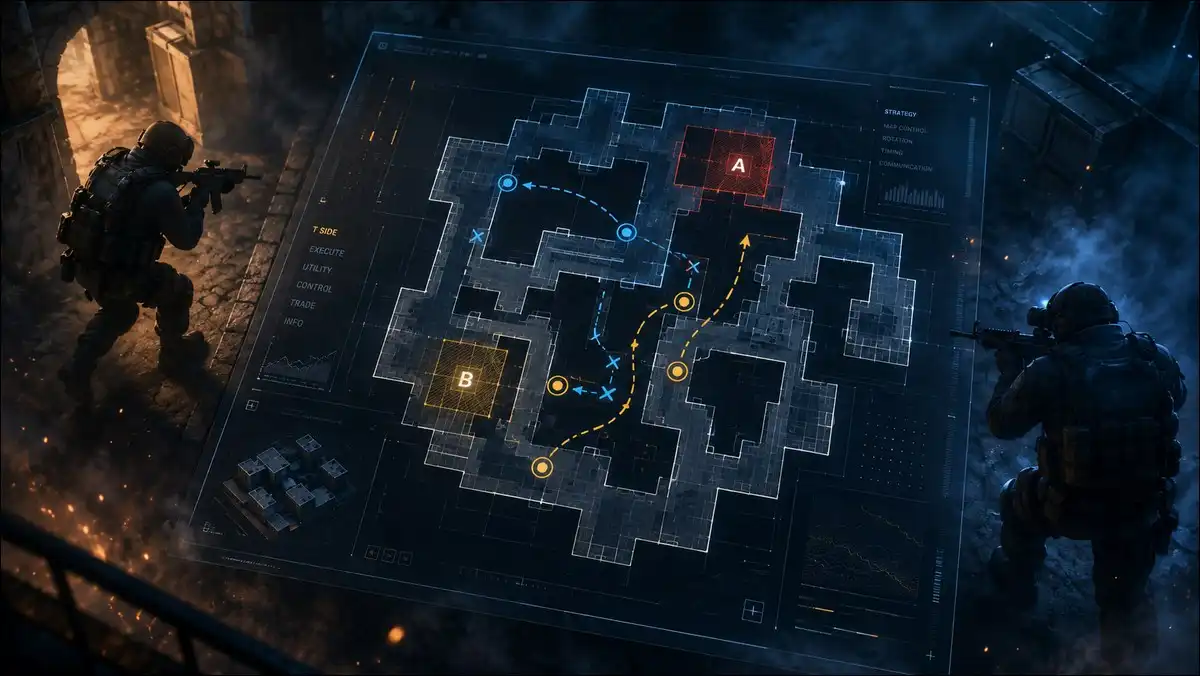
Today, skins are no longer a side topic in Counter-Strike 2. They have become one of the clearest ways players express identity, taste, and community belonging. In many ways, they now function as a second language of CS2. They are part of how people recognize each other, how they build their personal style, and how they stay involved with the game even when they are not actively playing.
Counter-Strike 2 has always been a competitive game first. Precision, timing, map knowledge, and communication still define what happens inside the server. But anyone who has spent enough time around the game knows that CS2 is no longer experienced only through matches. There is another layer that shapes how players see the game, talk about it, and stay connected to it every day. That layer is skins.
CS2 is no longer only about performance
For years, Counter-Strike was mostly discussed through mechanics. Aim, recoil, economy, utility usage, and map control were the pillars of nearly every serious conversation. Those things still matter, and they always will. But CS2 now exists inside a much wider player culture.
A modern Counter-Strike player does more than queue for matches. They follow updates, watch tournaments, compare inventories, react to new collections, talk about loadouts, and pay attention to the broader visual identity of the game. In that environment, skins are not just cosmetic details. They are part of the daily experience of being a CS2 player.
That is why skins hold such a unique place in the game. They are visible, personal, and instantly understandable. A player may not know your rating, your recent match history, or how often you play Premier, but they can immediately notice the way you build your inventory. In a game with such a strong and established culture, that means a lot.
A skin says more than people think
One of the reasons skins matter so much is that they communicate something without words. They give players a visual language. A clean, minimal inventory tells a different story than a bright, aggressive one. A carefully matched setup shows a different kind of personality than a random collection of unrelated items.
This makes skins much more powerful than they may look at first glance. They are not simply decoration. They create meaning inside the culture of the game. Over time, players begin to associate certain looks with certain attitudes, certain weapon choices with certain aesthetics, and certain loadout styles with specific kinds of players.
That is where skins stop being cosmetic and start becoming cultural. They become part of how people interpret one another within the CS2 ecosystem.
The game itself supports that kind of connection
Counter-Strike 2 also makes this stronger through presentation. The cleaner visual style, improved lighting, and more polished overall look make weapon finishes stand out more clearly than before. That gives inventories more presence during actual play.
In practical terms, this means skins are not hidden in the background. They are on screen constantly. Players spend hundreds of hours looking at their weapons, inspecting details, noticing patterns, and building a stronger attachment to how their loadout feels in motion. That continuous visibility turns skins into a natural part of the game’s rhythm.
Because of that, conversations around skins do not feel disconnected from the competitive side of CS2. They sit next to it naturally. One round can be about utility timing. The next discussion can be about a new visual combination. Both belong to the same ecosystem.
The skin culture keeps players connected between matches
One of the most interesting things about skins is how strongly they extend the life of the game beyond active play. A match ends, but the connection does not. Players still compare setups, browse inventories, react to community trends, and stay involved through that visual side of Counter-Strike.
That helps explain why CS2 remains so active as a community-driven game. It gives people reasons to remain engaged even outside the server. Not everyone is playing all the time, but many are still watching, reading, comparing, and discussing. Skins help sustain that connection because they are one of the easiest ways to stay mentally inside the world of the game.
This is also where related platforms begin to matter more. In today’s CS2 environment, users often move between gameplay, esports, inventory culture, and services built around that experience. One example is G4Skins, which fits naturally into that broader ecosystem where skins are not just items, but part of a wider community habit.
Skins helped turn CS2 into a lifestyle game
There are many multiplayer games that people enjoy while they are online and forget the moment they log off. Counter-Strike 2 is not really one of them anymore. It has become a game people carry with them between sessions. They think about it, follow it, and remain connected to it through multiple layers of engagement.
Skins play a major role in that shift. They give the game an ongoing visual life. They allow players to build familiarity, continuity, and a personal relationship with the experience. They also make the culture of CS2 easier to recognize from the outside. Even people who are not deeply involved in the scene can understand that this is a game with a strong visual identity and a community that cares about how it looks.
That kind of presence matters. It helps transform CS2 from a competitive shooter into something closer to a lifestyle space for many of its players.
Community identity now lives through visuals as much as gameplay
The strongest communities are usually built around shared references. In Counter-Strike 2, those references used to be almost entirely gameplay-based. Now they are visual as well. Certain weapons, certain finishes, certain combinations, and certain loadout themes become community signals in their own right.
This changes how people interact with the game. It adds another layer of recognition. A player is no longer known only by how they perform, but also by how they present themselves inside the world of CS2. That does not replace competition. It expands it into culture.
And once that happens, skins stop being a side feature. They become part of the social language of the game.
Why this matters for the future of CS2
This has long-term importance because games survive through more than mechanics. Strong mechanics bring players in. Culture is what keeps them there. Counter-Strike 2 already has one of the strongest competitive foundations in gaming. What makes it even more durable is the fact that it also has a living culture around it.
Skins are one of the clearest signs of that culture. They keep players connected, give the community a visual vocabulary, and make the game feel present even between matches. That is why they matter so much more today than they did years ago.
If CS2 continues growing as both a competitive game and a cultural ecosystem, skins will remain one of the most important bridges between those two worlds.
Skins in Counter-Strike 2 are no longer just visual extras. They have become one of the main ways players express identity, stay engaged with the game, and recognize each other within the community.
That is why they now feel like a second language of CS2. They do not replace gameplay, but they add a layer of meaning around it. And in a game that is followed as closely as Counter-Strike 2, that layer has become too important to ignore.
-

-

-
-
-

-

-

-

