
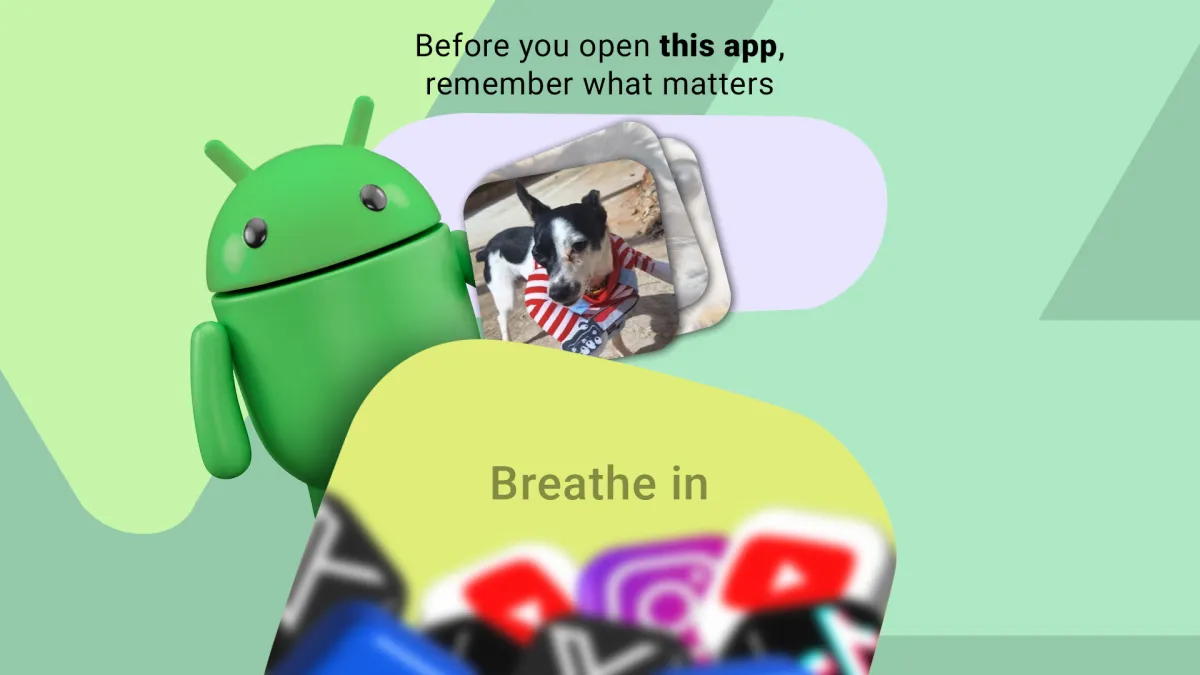
Google’s Android 17 will insert a pause screen between a user’s tap and the launch of any app they have self-designated as distracting, according to Android Police.
The feature targets what behavioral researchers call “autopilot launching” — the reflexive, near-unconscious act of opening an app before conscious intent catches up.
How the Feature Works
Users flag specific apps as distracting inside Android’s settings. From that point forward, opening one of those apps triggers an interstitial screen — a brief, forced delay — rather than an immediate launch.
The pause screen Does Not block access. It simply introduces friction, giving the user a moment to decide whether they actually intend to open the app.
That distinction matters. The design philosophy behind friction-based interventions holds that a split second of conscious awareness is often enough to break an automatic behavior loop.
The Science Behind the Pause
Research supports the approach. A 2022 study published in PLOS ONE found that prompting users to state their intention before opening a social media app reduced overall time spent in those apps by roughly 20 percent over a two-week trial period.
Still, friction alone does not guarantee behavior change. Users habituate to interstitial screens quickly, and repeated exposure can render the pause effectively invisible.
Google has not yet detailed whether Android 17 will vary the pause mechanism over time to counteract habituation.
Why Google Is Building This In
Pressure on platform makers to address compulsive phone use has grown sharply in recent years. The U.S. Surgeon General issued an advisory in 2023 calling on technology companies to take greater responsibility for the effects of their products on attention and mental health.
Several U.S. states have moved to restrict smartphone use in schools, and legislators in the European Union have pushed for design standards that limit addictive interface patterns — sometimes called “dark patterns” — in consumer software.
Google already offers a Digital Wellbeing suite within Android, which includes screen time tracking, app timers, and a grayscale Wind Down mode. Android 17’s pause feature would extend that suite with a real-time, in-the-moment intervention rather than a retrospective dashboard.
What Android 17 Has Not Yet Confirmed
Google has not announced a public Release Date for Android 17 beyond its standard fall developer cycle. The company has not confirmed whether the pause feature will appear in the final release or remain a developer preview option.
Android holds roughly 72 percent of the global mobile operating system market, according to StatCounter data from early 2025, meaning even a modestly effective intervention at this scale could affect hundreds of millions of users.
Apple introduced its own Screen Time tools in iOS 12 in 2018, and has expanded them incrementally since. Neither company has yet adopted mandatory, regulator-imposed attention design standards.
-

-

-

-

-

-

-

-

