
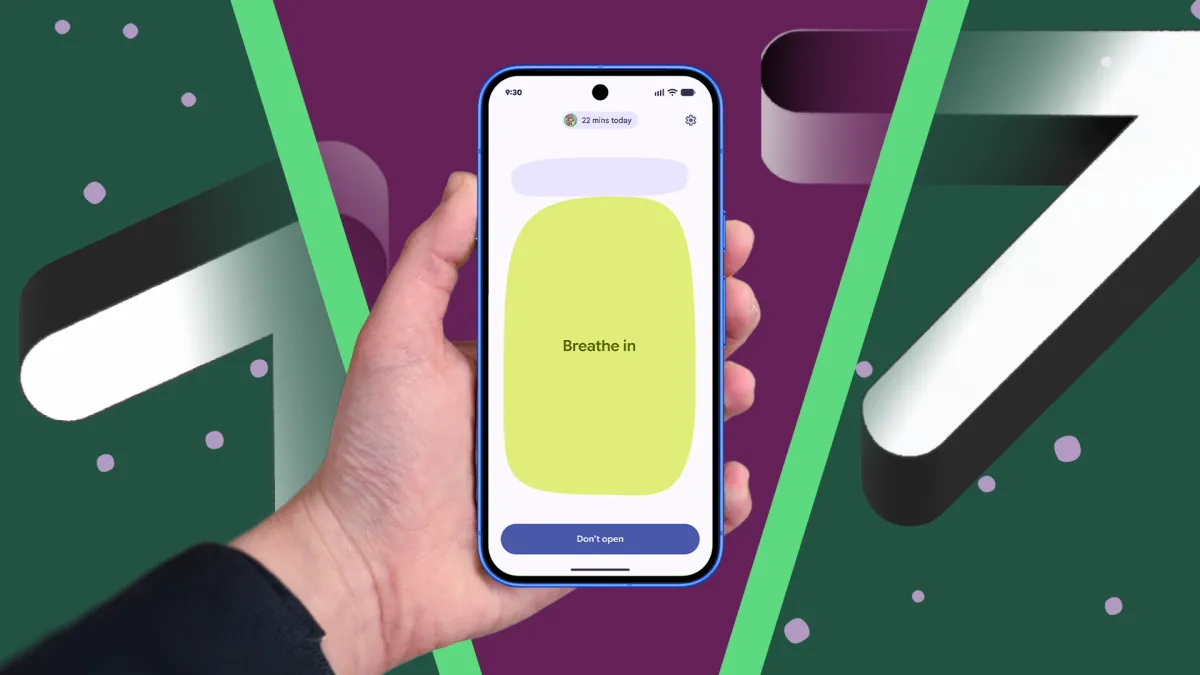
Google’s upcoming Android 17 includes a feature called Pause Point that inserts a 10-second waiting period before a user can open a selected app, directly targeting the automatic, habit-driven phone checking that existing screen-time tools have failed to interrupt.
The feature differs from Android’s current Focus Mode, which blocks distracting apps outright but allows users to bypass restrictions instantly with a single tap.
What Pause Point Does Differently
Pause Point does not block access. Instead, it forces a brief, deliberate pause — long enough to make a user conscious of why they picked up their phone in the first place.
That friction is the point. Behavioral researchers have long argued that a short delay between impulse and action disrupts automatic behavior more effectively than an outright barrier that users learn to dismiss.
Focus Mode, by contrast, trains users to tap through restrictions rather than reconsider them. The bypass becomes its own reflex.
Why Existing Tools Fall Short
Android’s Digital Wellbeing suite, introduced in Android 9 Pie in 2018, gave users app timers, Focus Mode, and usage dashboards. Still, heavy users consistently found ways around them.
App timers lock an app after a set daily limit but offer a one-tap “ignore for today” option. That single tap costs almost no effort, which largely defeats the purpose for anyone prone to mindless scrolling.
Focus Mode lets users pause their own restrictions for a set window — a useful pressure valve, but one that also makes the tool trivially easy to override in a weak moment.
Meanwhile, screen time on Android devices remains high. DataReportal's Global Digital 2024 report found the average internet user worldwide spent 6 hours and 37 minutes per day on screens connected to the internet, with mobile accounting for the largest share.
The Friction Argument
Researchers at the University of Pennsylvania published findings in the Journal of Social and Clinical Psychology showing that even modest reductions in social media use — 10 minutes less per platform per day — produced measurable drops in loneliness and depression scores over three weeks.
Pause Point targets that same margin. Ten seconds is short enough that it does not feel punitive, but long enough to break the loop between stimulus and screen-unlock.
That gap matters because much of heavy smartphone use is not intentional. Users pick up a phone to check the time and land on Instagram 20 minutes later without a clear decision point in between.
What Google Has Said
Google has not released detailed documentation on Pause Point ahead of Android 17’s expected release. The feature surfaced in early developer previews and builds released to testers, where it appeared under the Digital Wellbeing settings menu.
Android 17 is expected to reach stable release in the second half of 2025, following Google’s standard annual release schedule.
Digital Wellbeing has received incremental updates each year since its 2018 debut, though no prior update introduced a time-delay mechanism of this kind.
-

-

-

-

-

-

-

-

