
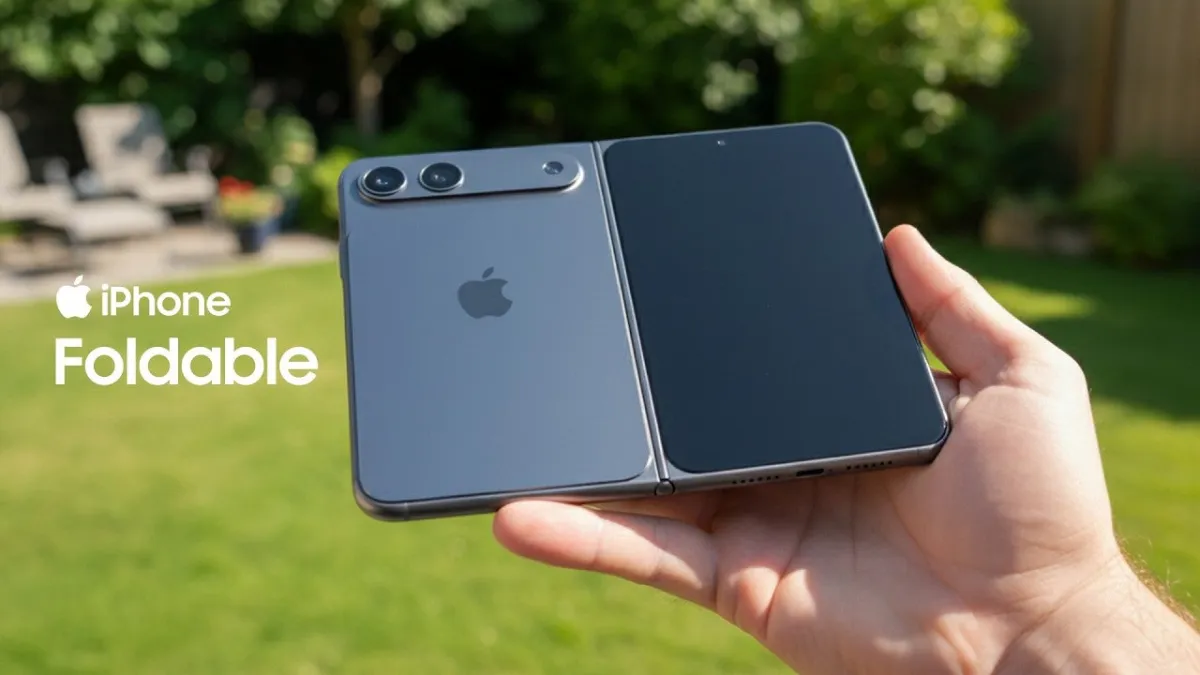
Apple is preparing to launch its first foldable iPhone, a device expected to carry the Ultra branding, within months, according to reports from industry analysts and supply chain sources.
The announcement marks a significant moment for the company, which has watched rivals Samsung, Google, and Motorola build out the foldable smartphone segment — a category in which devices fold along a hinge to offer a larger display in a compact form — for several years.
What We Know About the Device
Analysts tracking Apple’s supply chain have signaled that component orders consistent with a large-format foldable device are already in motion, suggesting a launch timeline within 2025.
The device is widely expected to carry the “Ultra” designation, positioning it above the existing iPhone Pro Max line in Apple’s product hierarchy.
Still, Apple Has not confirmed any details about the product, its price, or its release date.
A Market Apple Has Not Yet Entered
Samsung has dominated the foldable segment since it launched the original Galaxy Fold in 2019, with the global foldable smartphone market reaching approximately 21.8 million units shipped in 2024, according to IDC.
That figure represents a small but fast-growing slice of overall smartphone shipments, which IDC put at roughly 1.24 billion units globally in 2024.
Apple entering the category would represent the most closely watched product launch in the foldable segment to date, analysts say.
Pricing and Competition
A foldable iPhone Ultra would likely carry a price tag well above the current iPhone 16 Pro Max, which starts at $1,199 in the United States.
Samsung’s Galaxy Z Fold 6, its flagship book-style foldable, starts at $1,899 in the U.S., giving some indication of where premium foldable pricing currently sits.
By contrast, Apple has historically launched new product categories at prices that test consumer tolerance — the original iPhone debuted at $499 in 2007, a figure that drew widespread skepticism before the device reshaped the industry.
Why Now
Apple typically enters markets after competitors have validated consumer demand and absorbed early manufacturing costs.
The foldable hinge mechanism — the component most responsible for device failures and high production costs — has matured considerably since Samsung’s early models suffered high return rates.
That said, durability questions around foldable displays persist across the industry, with screen creasing along the fold line remaining a common consumer complaint.
Apple’s entry would face immediate scrutiny on whether it has solved problems that competitors have only partially addressed.
Background
The foldable iPhone has circulated in analyst reports and supply chain leaks for at least three years, with multiple projected launch windows passing without a product materializing.
Ming-Chi Kuo, a supply chain analyst widely followed for Apple predictions, has pointed to 2025 as the most credible window yet for the device’s arrival.
Apple’s iPhone line generates the majority of the company’s revenue, accounting for $201.18 billion of its $391 billion in total fiscal year 2024 revenue, according to Apple's annual SEC filing.
-

-

-

-

-

-

-

-

