
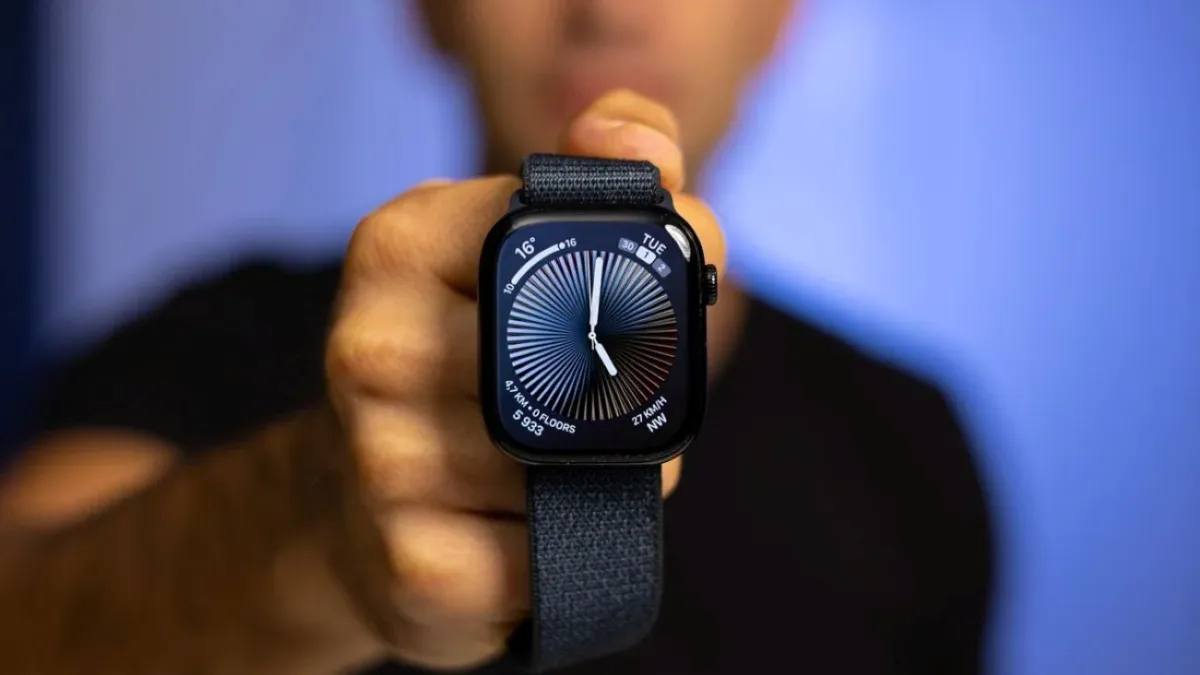
A new update to the Apple Watch Weather app now lets users track storms directly from their wrist, expanding the device’s weather monitoring capabilities beyond basic temperature and precipitation readings.
The update adds real-time severe weather alerts, including lightning strike detection and storm path tracking, features previously available only on third-party apps or iPhone weather platforms.
What the Update Adds
Users can now receive wrist-based notifications when lightning activity occurs within a set radius of their location — a function that meteorologists call proximity alerting.
The app also displays storm cell movement, letting users see how fast a system is approaching and from which direction.
Still, the depth of data available on the smaller Apple Watch display remains limited compared with full mapping tools on iPhone or dedicated weather stations.
Why It Matters
Severe weather kills hundreds of people annually in the United States. According to the National Weather Service, lightning alone strikes roughly 300 Americans each year, killing an average of 20.
Wearable alerts close that warning gap for people working outdoors, hiking, or away from their phones.
That said, the Apple Watch update does not replace professional meteorological tools or emergency broadcast systems. It functions as a personal early-warning layer.
How It Works
The Weather app pulls data from Apple’s backend weather service, which the company built after acquiring Dark Sky in 2020 for an undisclosed sum.
Dark Sky was known for its hyperlocal, minute-by-minute forecasting technology — the kind of granular prediction that now powers Apple’s native weather tools across iPhone, iPad, and Apple Watch.
Apple Has not published a technical breakdown of the storm-tracking methodology used in this specific update.
Meanwhile, competing wearables from Garmin have offered storm alerting for several years, particularly on devices aimed at outdoor and trail users.
Compatibility and Availability
The update is available to Apple Watch Series 4 and later models running watchOS 11 or higher. Users running older software must update through the Watch app on a paired iPhone.
Apple Watch held roughly 30% of the global smartwatch market in 2023, according to IDC, making it the dominant single vendor in the category by a wide margin.
The Weather app update rolled out as part of a broader watchOS point release and requires no separate download.
Apple introduced native weather functionality on Apple Watch with watchOS 2 in 2015, at launch relying on third-party data providers before gradually building out its own infrastructure.
-
-

-

-

-
-

-

-

