
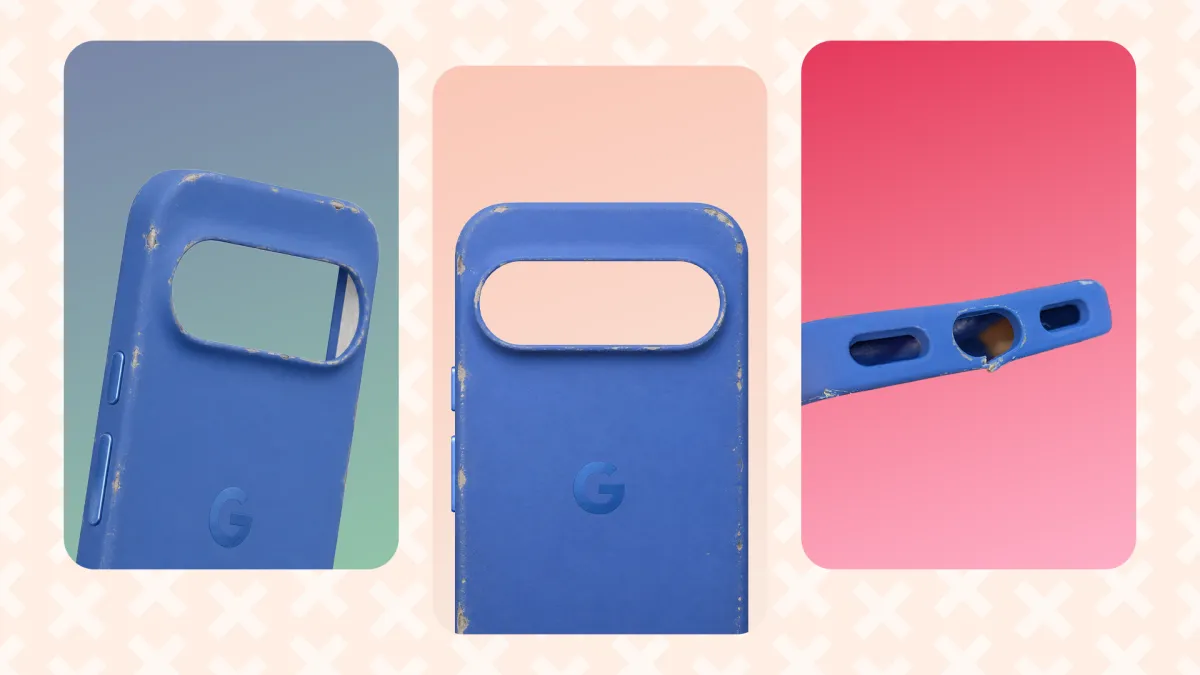
A Google Pixel 10 Pro owner says the company’s own $50 PixelSnap case has begun physically disintegrating after seven months of regular use, raising questions about the durability of Google’s first-party accessories.
The owner, writing for Android Police, said he upgraded from a Pixel 8 to the Pixel 10 Pro after weighing whether the newer hardware justified the switch.
He purchased the PixelSnap case — Google’s proprietary magnetic attachment system for the Pixel 10 series — directly from Google at launch.
Within seven months, he said the case showed visible material breakdown under normal everyday conditions, without drops or unusual wear.
What Is PixelSnap?
PixelSnap is Google’s answer to Apple’s MagSafe ecosystem — a built-in magnetic ring system designed to attach compatible accessories to the back of Pixel 10 series phones.
Google positioned it as a premium feature of the Pixel 10 lineup, with first-party cases priced at $50 or more through the Google Store.
The cases use a thermoplastic polyurethane (TPU) outer shell — a flexible polymer commonly used in phone cases — bonded to an internal magnetic array.
The Breakdown
The owner said the outer material began separating and peeling away from the case body, a process sometimes called delamination, where bonded layers split apart.
He said he had not subjected the case to conditions beyond ordinary daily pocket carry and occasional desk use.
Still, the structural integrity of the case deteriorated to the point where he considered it no longer functional as a protective accessory.
Google has not issued a public statement addressing PixelSnap case durability complaints.
Broader Context
Consumer durability complaints about smartphone cases are not uncommon, but they carry more weight when the accessory comes directly from the device manufacturer at a premium price point.
Apple’s MagSafe-compatible cases, which occupy a comparable price bracket, have faced similar user complaints about coating wear — though Apple Has occasionally replaced affected units under warranty on a case-by-case basis.
Google’s standard limited warranty for hardware accessories covers manufacturing defects for one year from the date of purchase in the United States, according to Google's warranty policy.
Whether material delamination qualifies as a manufacturing defect under that policy remains a point of contention for consumers seeking replacements.
The Pixel 10 Pro itself launched in 2025 as Google’s flagship device, featuring the company’s latest Tensor G5 chip and a redesigned camera array.
Google marketed the PixelSnap ecosystem as a key differentiator from competing Android flagships at launch, bundling accessory compatibility into its broader hardware pitch.
-
-

-

-

-

-

-

-

