
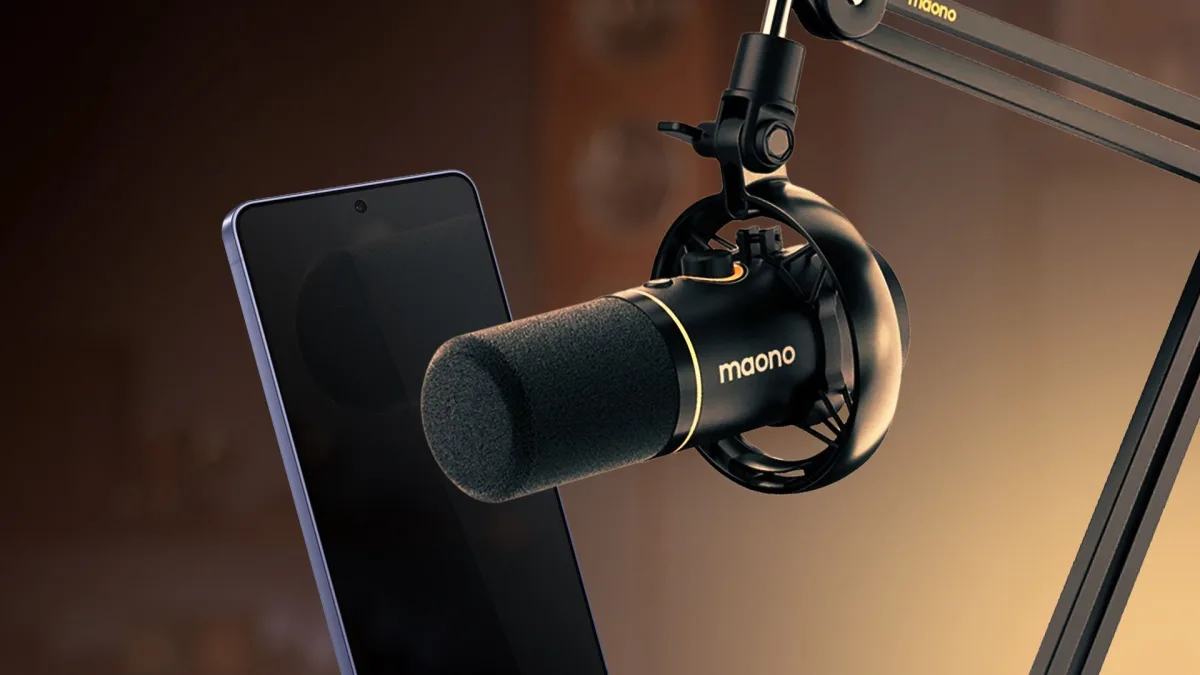
A $130 microphone is challenging the case for traditional home studio setups by connecting directly to Android smartphones, cutting out the audio interface hardware most recording rigs require.
The Maono PD200X is a dynamic microphone — a type that captures sound via electromagnetic induction and handles loud sources without distortion — with a built-in analog-to-digital converter. That converter lets it plug straight into an Android device over USB-C, bypassing the external soundcard that condenser microphone setups typically need.
What it replaces
A standard entry-level home studio build often runs $300 to $500. A Behringer bundle covering a condenser microphone, acoustic screen, USB soundcard, and headphones lands near $400 at retail.
The PD200X targets that spend directly. One User replaced a four-piece Behringer rig with the single mic and an Android phone.
How it works
Dynamic microphones are generally more forgiving than condenser mics in untreated rooms. They reject more ambient noise and need no phantom power — the 48-volt electrical current that condenser mics draw from a soundcard to operate.
That phantom power requirement is precisely why condenser setups need an external audio interface, a piece of hardware that converts analog audio to digital signal and feeds power to the mic. Removing it from the chain simplifies the setup and lowers the cost.
The PD200X handles that conversion internally. A USB-C cable runs directly from the mic to the phone.
Android as a recording platform
Android’s USB audio class compliance — a technical standard that allows devices to recognize external audio hardware without custom drivers — makes this connection possible on most modern handsets. iPhones require a Lightning or USB-C adapter and additional configuration steps depending on the app.
Recording apps on Android, including Adobe Audition and Dolby On, support USB microphone input. That gives mobile podcasters, voice-over artists, and content creators a portable, low-cost alternative to a fixed studio desk.
The trade-off is real. A phone screen offers less visual workspace than a laptop running a full digital audio workstation, and mobile storage limits long-form session files. Monitoring — listening to audio through headphones while recording — also depends on whether the app and device support low-latency USB audio passthrough.
Maono’s position
Maono, a Chinese audio hardware manufacturer, markets the PD200X alongside a wider line of USB and XLR microphones aimed at the prosumer segment — buyers who want near-professional quality without professional pricing.
The mic carries a cardioid polar pattern, meaning it picks up sound primarily from the front and rejects noise from the sides and rear. It also includes a headphone jack on the body for direct monitoring without latency.
At $130, it sits below the entry price of dedicated audio interfaces from Focusrite and PreSonus, both of which start around $120 before the cost of a microphone.
-

-

-

-

-

-

-

-

