
Thea Energy, the Princeton-linked fusion startup, raised $100 million in new funding, pushing it into the top tier of privately backed fusion companies globally.
The company targets a working commercial fusion reactor by 2034, an ambition that hinges on its proprietary planar coil magnet technology — a design that arranges magnets in flat, programmable arrays rather than the complex twisted coils used by most stellarator-style reactors.
The Technology
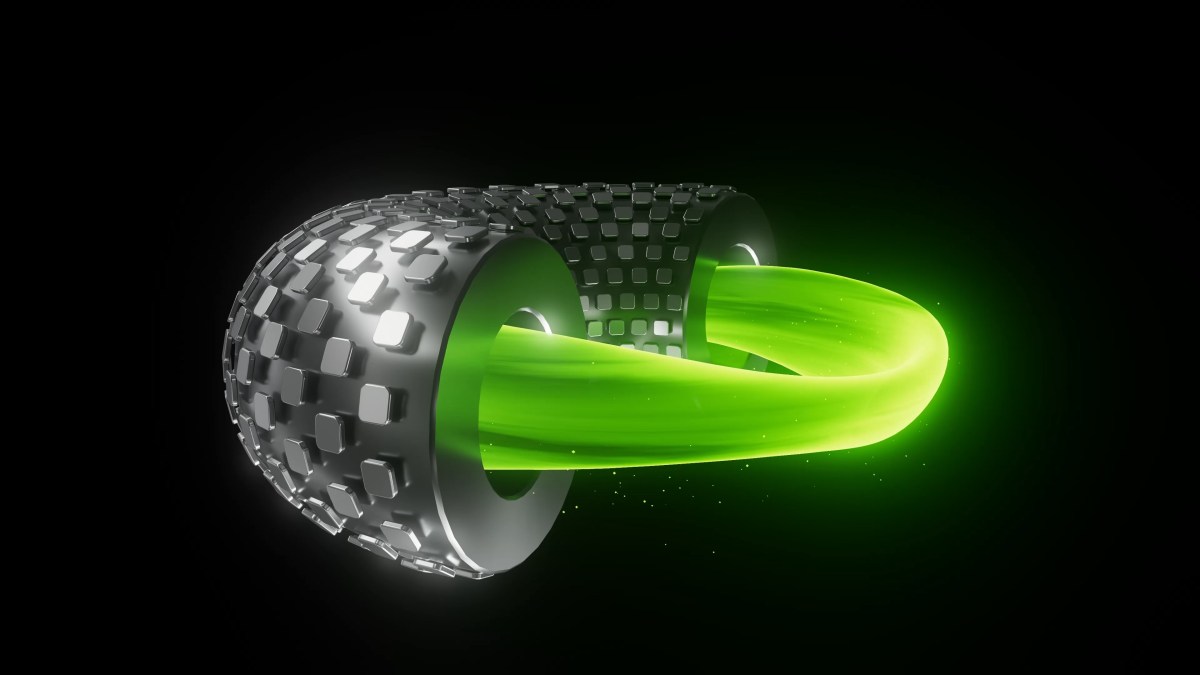
Conventional stellarator reactors require intricately shaped magnets that are expensive and difficult to manufacture at scale. Thea’s approach replaces those with flat, individually controllable magnets arranged in a grid — a concept the company compares in principle to how pixels build an image.
That design, if it holds up at commercial scale, could reduce manufacturing complexity and cost. Still, the company has not yet demonstrated the concept in a full-scale reactor environment.
Funding Context
Private investment in fusion energy has accelerated sharply over the past several years. According to the Fusion Industry Association, private fusion companies had raised more than $6.2 billion in cumulative investment as of 2023, with the pace of new capital increasing year over year.
Thea’s $100 million raise positions it among the better-capitalized players in that field. The company spun out of Princeton University, where research into stellarator-type plasma containment has continued for decades.
Fusion energy works by forcing light atomic nuclei — typically isotopes of hydrogen — to collide and merge, releasing large amounts of energy. Unlike fission, which splits heavy atoms and generates long-lived radioactive waste, fusion produces minimal waste and carries no risk of a runaway chain reaction.
The core engineering challenge has always been containment: plasma must reach temperatures exceeding 100 million degrees Celsius, far hotter than the sun’s core, and remain stable long enough to produce more energy than the system consumes.
No commercial fusion plant has yet achieved that threshold on a sustained basis. In December 2022, the U.S. Department of Energy's National Ignition Facility recorded the first fusion reaction to produce more energy than the laser energy delivered to the target — a milestone in inertial confinement fusion, though one that used a different technical approach than Thea’s stellarator design.
The Race to Commercial Fusion
Thea competes in a field that includes several well-funded rivals. Commonwealth Fusion Systems, a Massachusetts Institute of Technology spinout, has raised more than $1.8 billion according to company disclosures, and targets a demonstration reactor in the late 2020s. TAE Technologies and Helion Energy have also attracted hundreds of millions in private capital.
Helion drew particular attention after Microsoft agreed in 2023 to purchase electricity from a Helion plant, contingent on the company achieving commercial operation — a deal reported by Reuters.
The 2034 timeline Thea has set would place its commercial reactor roughly a decade out. Whether planar coil magnets can deliver the plasma confinement quality needed to sustain fusion at commercial scale remains the central technical question the company must answer as it deploys the new capital.
-

-

-

-

-

-

-

-

