
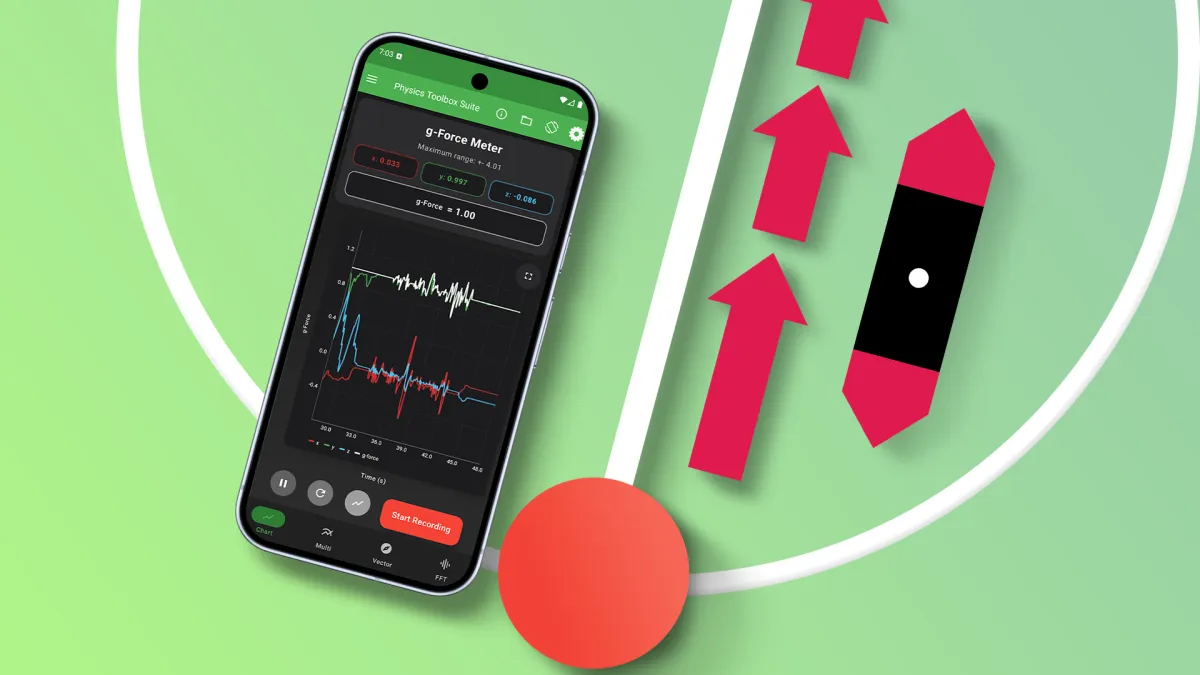
Most people use their smartphones daily without knowing how many sensors sit dormant inside them.
A typical modern Android device carries anywhere from a dozen to more than 20 onboard sensors, including hardware Most Users Never consciously activate — barometers, gyroscopes, magnetometers, and ambient light detectors among them.
What’s Actually Inside Your Phone
A barometer measures atmospheric pressure and can estimate altitude. A magnetometer functions as a compass by detecting magnetic fields. A gyroscope tracks rotational movement with precision beyond what a standard accelerometer — the sensor that detects basic motion and screen orientation — can manage alone.
Still, most of these sensors run silently in the background, feeding data to apps that rarely surface What They collect.
The Access Problem
Android’s permission architecture controls which apps can read which sensors, but many sensor types fall outside the standard permission prompts users see at installation. As a result, apps can query certain sensors without explicit user approval.
Google's Android developer documentation classifies sensors into three categories: motion sensors, environmental sensors, and position sensors. Each serves distinct functions, yet few consumer-facing tools expose their raw output in readable form.
That gap is where dedicated sensor-reading apps come in.
What the Apps Reveal
Tools such as Physics Toolbox Sensor Suite and AndroSensor pull live data streams from every available sensor on a device, displaying readings in real time.
Running one of these apps on a mid-range Android handset can surface between 15 and 25 active sensor feeds simultaneously, depending on the manufacturer’s hardware configuration.
Some findings surprise users. A phone lying flat on a table still registers micro-vibrations through its accelerometer. Carrying a device in a pocket at altitude produces measurable barometric shifts. The magnetometer responds to nearby electrical equipment.
Why Manufacturers Include Them
Sensor arrays expanded significantly as smartphone makers competed on features through the 2010s. Fitness tracking, augmented reality, and navigation all drew on hardware that had no single-purpose consumer application on its own.
Statista data shows global smartphone shipments exceeded 1.2 billion units in 2023, each device shipping with a sensor suite that, in many cases, its owner will never fully use.
Meanwhile, developers building health and environmental monitoring apps rely on the same hardware sitting unused on hundreds of millions of devices.
The Privacy Angle
Sensor access carries real privacy implications. Researchers at Carnegie Mellon University demonstrated in published work that motion sensor data alone can reveal a user’s location, activity patterns, and even keystrokes under certain conditions.
That finding pushed Google to tighten sensor access rules in successive Android versions, requiring explicit permission for high-frequency accelerometer data starting with Android 12.
Even so, many lower-frequency sensor feeds remain accessible without user consent, a point privacy advocates continue to raise with platform operators.
Android’s sensor framework dates to the platform’s earliest versions, with Google expanding access controls incrementally as research exposed new risks.
-

-

-

-

-

-

-

-

