
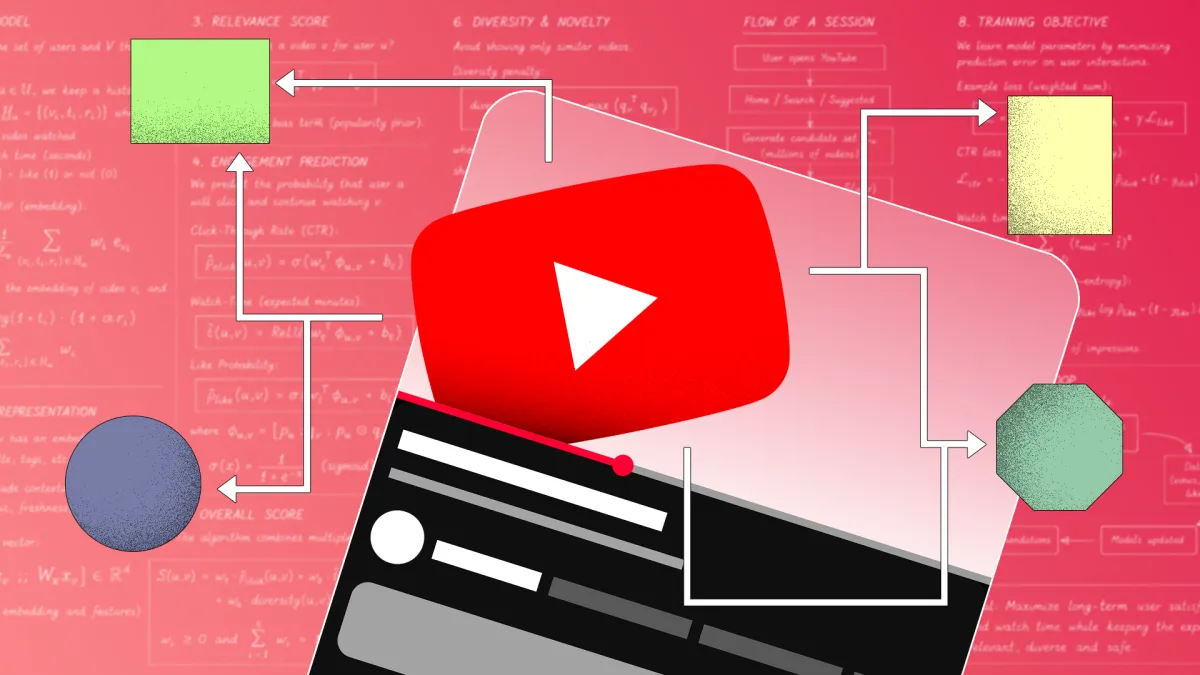
YouTube has launched a feature that lets users type prompts directly into its recommendation system, allowing them to steer their own feeds rather than waiting for the algorithm to decide.
The feature marks a structural shift in how the platform surfaces content — users can now tell YouTube what they want to watch instead of having their viewing history dictate every suggestion.
How It Works
The prompt-based feed tool accepts natural-language input, meaning users can describe a mood, topic, or format and receive tailored recommendations in response.
That puts a layer of deliberate control between the viewer and the platform’s automated suggestion engine, which has historically relied on click patterns and watch time to determine what appears next.
A Long-Standing Criticism
YouTube’s recommendation algorithm has drawn repeated scrutiny from researchers and regulators over its tendency to maximize watch time at the expense of user intent.
A 2022 Mozilla Foundation study found that YouTube’s “Dislike” and “Not Interested” signals failed to stop unwanted recommendations in the majority of tested cases, raising questions about how much influence users actually held over their own feeds.
Still, YouTube has incrementally expanded user controls over the years — including topic mutes and the ability to clear watch history — though critics argued those tools remained too buried to be practical for most people.
Why It Matters Now
Letting users prompt the algorithm directly is a different approach entirely — it moves the starting point of a recommendation session from passive behavioral data to an active, expressed preference.
That distinction matters because behavioral data captures what people clicked, not necessarily what they wanted; a user who watches one true-crime video Does Not signal an appetite for an endless queue of them.
Meanwhile, the broader AI industry has normalized prompt-based interaction through tools like ChatGPT and Google Gemini, which may have lowered the barrier for YouTube to introduce a similar input model for content discovery.
Google, YouTube’s parent company, has been integrating AI-assisted features across its product suite throughout 2024 and into 2025, including search summaries and automated content tools for creators.
Platform Context
YouTube reaches more than 2.7 billion logged-in users per month, according to the company’s own figures, making the scale of any feed-behavior change significant.
The recommendation engine drives an outsized share of total views on the platform — YouTube has previously said that more than 70% of watch time comes from algorithmically recommended content, according to statements reported by MIT Technology Review.
Any tool that redirects even a fraction of that traffic based on explicit user input rather than inferred preference represents a meaningful functional change for both viewers and the creators who depend on recommendation-driven discovery.
-

-

-

-

-

-

-

-

