
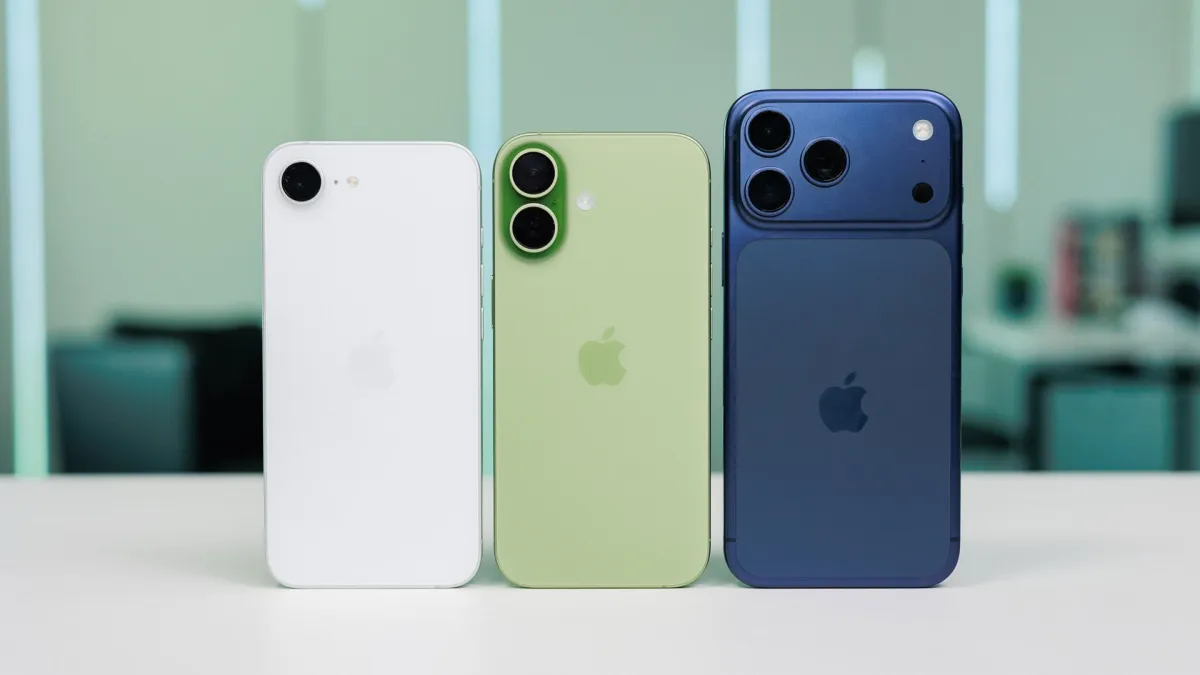
Apple Plans to release the iPhone 17e with a 6.1-inch display, holding the line on a screen size competitors have largely abandoned in favor of larger panels.
The decision puts the 17e in a shrinking category of compact flagship smartphones — devices that prioritize one-handed use over screen real estate.
How the 17e Measures Up
At 6.1 inches, the 17e matches the display size Apple used in the standard iPhone 16, which measured 147.6 mm tall, 71.5 mm wide and 7.8 mm thick, according to Apple's official specifications.
That footprint keeps the phone reachable across the full screen with a single hand for most adults — a feature that has quietly become a selling point as the broader market drifts toward 6.7-inch and larger screens.
By contrast, Samsung’s Galaxy S25 ships with a 6.2-inch base display, while its Plus and Ultra variants stretch to 6.7 inches and 6.9 inches respectively, per Samsung's product pages.
Who This Phone Is For
Apple Has historically used its lower-cost “e” line — previously the iPhone SE — to capture budget-conscious buyers and users upgrading from older, smaller devices.
The 17e is expected to replace the SE lineup entirely, targeting buyers who want a modern Apple device without paying Pro prices.
Still, 6.1 inches is no longer the compact outlier it once was. When Apple launched the original iPhone SE in 2016, it carried a 4-inch screen — a size that felt standard at the time.
The market has since shifted dramatically. Counterpoint Research reported in 2024 that devices with screens above 6.5 inches accounted for the fastest-growing segment of global smartphone shipments.
The Trade-Off
A smaller chassis limits battery volume. That constraint has historically forced Apple to make hard choices between thinness, battery life and processing power in its compact models.
The original iPhone SE (third generation) launched with a 2,018 mAh battery — well below the 3,279 mAh unit Apple placed inside the iPhone 14 at the time, per Apple's technical specifications.
Whether the 17e closes that gap remains unclear ahead of an official announcement.
That said, the A-series chips Apple uses — the same silicon family powering its Pro models — deliver strong efficiency gains with each generation, which can partially offset a smaller battery.
The Case for Compact
Not every buyer wants a phone that requires two hands or a large pocket. Ergonomics researchers and occupational therapists have long flagged extended one-handed phone use as a contributor to repetitive strain, particularly for users with smaller hand spans.
Apple appears to be betting a meaningful slice of its customer base still values a phone they can hold, navigate and pocket without adjusting their grip.
The global smartphone market shipped approximately 1.24 billion units in 2024, according to IDC. Even a fraction of that market prioritizing compact form factors represents tens of millions of potential buyers.
Apple has not confirmed a Release Date or final specifications for the iPhone 17e.
-

-

-

-

-

-

-

-

