
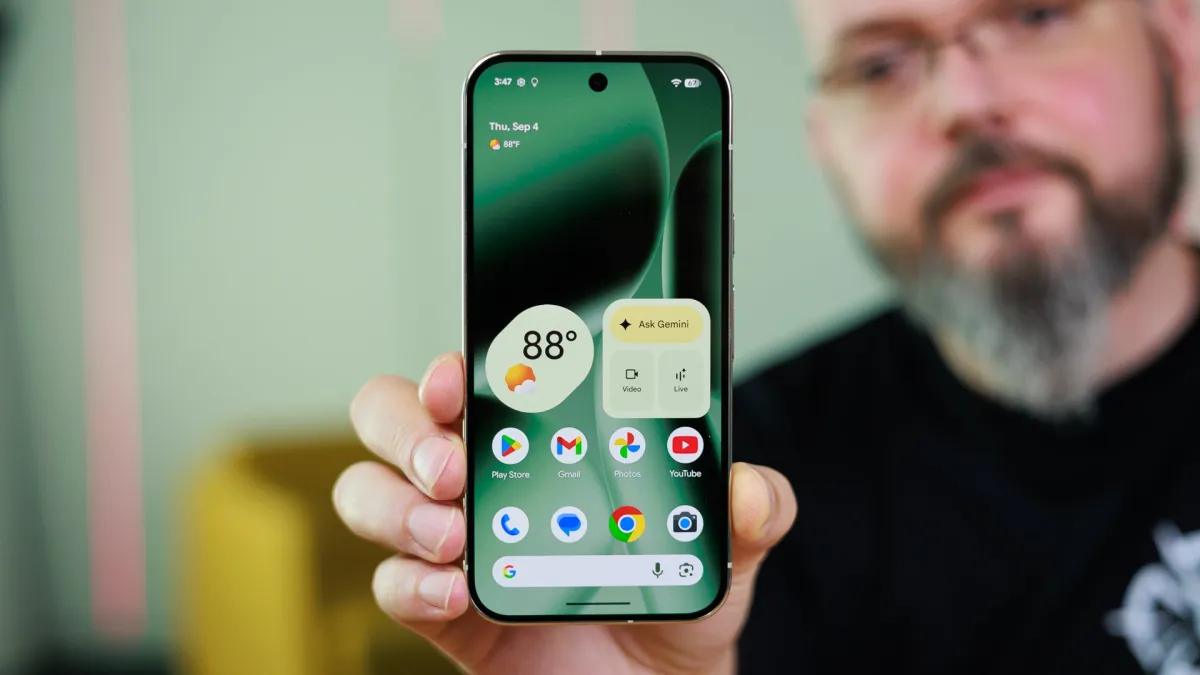
Google is upgrading its Pixel phone Call-Screening Tool to let users record personalized greetings, a move that positions the feature as a direct rival to traditional carrier voicemail.
The update targets Take a Message — Pixel’s built-in call-handling function that screens incoming calls and transcribes the caller’s response in real time — by allowing owners to replace the default automated greeting with their own recorded voice.
What’s Changing
Until now, Take a Message played a generic, Google-generated prompt to callers, giving Pixel owners no ability to customize what a caller heard.
The new option Lets Users record a greeting of their choosing, which the phone then plays automatically when a call goes unanswered.
That brings the feature closer to conventional voicemail in feel, while retaining the core advantage of on-device transcription — written call summaries delivered without the user ever picking up.
Why It Matters
Carrier voicemail has remained largely unchanged for decades, offering little beyond audio playback and, on some networks, basic visual voicemail — a system that displays messages as a list rather than requiring users to dial in.
Google’s approach cuts carriers out of that loop entirely.
Take a Message runs locally on the Pixel, meaning transcripts arrive faster and callers reach a greeting without routing through a carrier’s network infrastructure.
Still, adoption depends on whether users find the setup process straightforward enough to bother switching from a system that, however dated, already works by default.
Availability
Google has not announced a firm rollout date for the custom greetings option.
The feature is expected to reach Pixel Devices through a software update, though the company has not confirmed which Pixel models or Android versions will support it at launch.
Google launched Take a Message as part of its broader Phone app improvements, which also include real-time call screening — a function that intercepts suspected spam calls and displays a live transcript of what the caller says before the user decides whether to answer.
The Phone app’s screening tools are among the features Google restricts to its own Pixel hardware, rather than making them available across all Android devices.
-

-

-

-

-

-

-

-

