
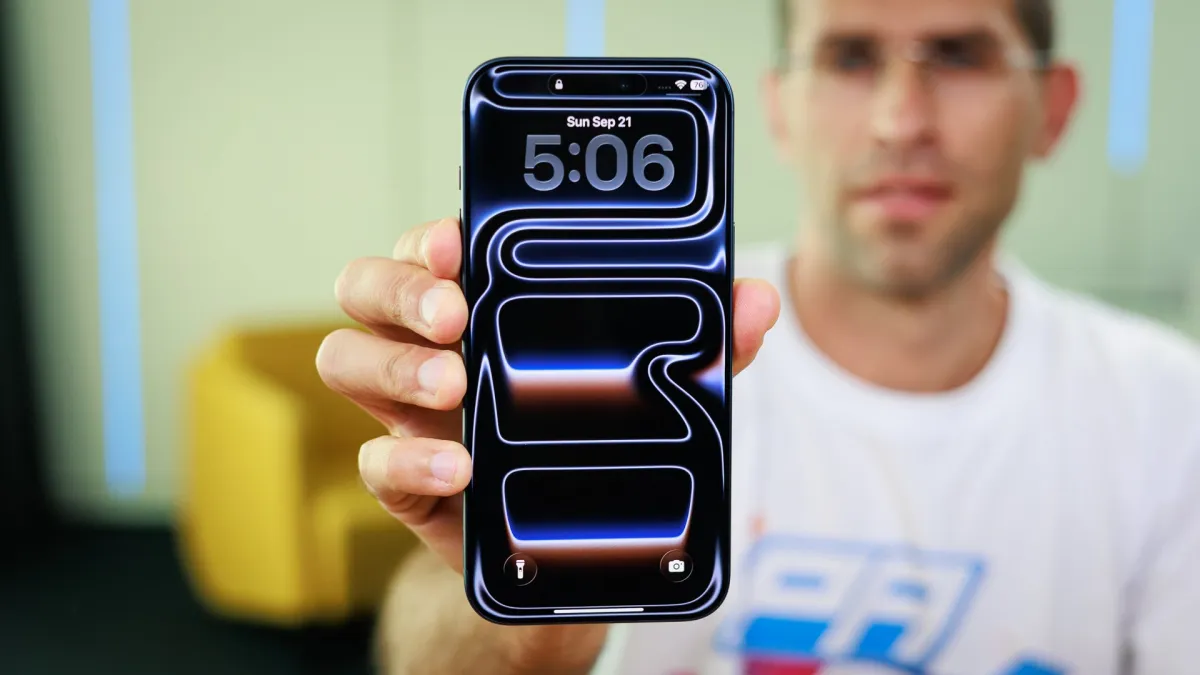
A leaked specification sheet circulating among supply chain sources suggests Apple’s iPhone 18 Pro will carry a battery capacity close to that of the iPhone 13 Pro Max, released in 2021 — reigniting long-standing criticism that the company has stalled on power hardware.
The leak, first reported by PhoneArena, points to a capacity figure that has moved only marginally across multiple iPhone Pro generations.
What the Numbers Show
Apple has not publicly confirmed any specifications for the iPhone 18 series, which it is expected to announce in September 2026.
Still, supply chain leaks have historically proven reliable for Apple hardware details, particularly in the months before a product launch cycle begins.
The iPhone 13 Pro Max shipped with a 4,352 mAh battery, according to Apple’s own published specifications.
By contrast, rival Android flagships have pushed well past the 5,000 mAh mark — and in some cases beyond 6,000 mAh — in recent product cycles.
Samsung’s Galaxy S25 Ultra, for instance, carries a 5,000 mAh cell, according to Samsung's official spec sheet.
Apple’s Efficiency Argument
Apple has long argued that raw battery capacity figures do not tell the full story.
The company points to its tight integration between its A-series chips — custom silicon it designs in-house — and iOS software as the reason iPhones deliver competitive Battery Life despite smaller cells.
That argument has merit in benchmark testing. Independent tests conducted by GSMArena have repeatedly shown iPhone Pro models trading blows with, and sometimes outperforming, Android competitors on screen-on time despite lower mAh ratings.
Even so, efficiency gains from each new chip generation are incremental, and users who demand all-day-plus battery life have consistently pushed back on Apple’s conservative approach to physical battery size.
The Broader Hardware Context
Apple faces compounding pressure on internal space as it adds features to the Pro line.
The company introduced a larger camera array with the iPhone 15 Pro and expanded the system further with the iPhone 16 Pro, consuming internal volume that might otherwise accommodate a bigger battery.
Thermal management hardware, antenna arrays, and the growing footprint of Apple’s modem components — the company began transitioning to its own in-house modem with the iPhone 16e — all compete for space inside the chassis.
Apple completed its first full in-house modem integration with the iPhone 16e earlier this year, according to Bloomberg, and analysts expect that modem to appear across the iPhone 18 lineup.
In theory, a mature in-house modem could consume less power than a third-party Qualcomm unit, potentially offsetting some capacity concerns.
What Consumers Want
Consumer surveys tell a consistent story. Pew Research Center data has shown battery life ranks as the top or second-top factor in smartphone purchase decisions among U.S. adults across multiple survey years.
Apple’s own Customer Satisfaction scores remain high, but battery life draws more complaints in user reviews than nearly any other hardware attribute on major retail platforms.
The iPhone 18 Pro’s commercial reception may ultimately test how far Apple’s efficiency reputation can carry it against rivals who have simply made their batteries bigger.
-
-

-

-

-

-

-

-

