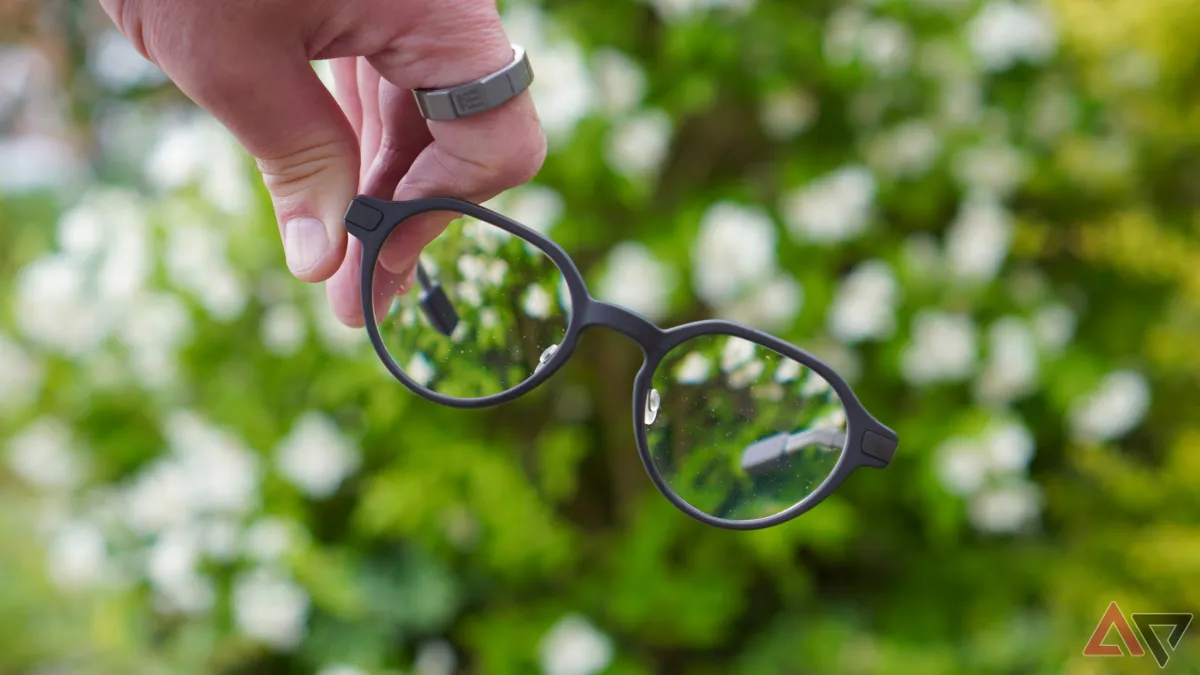
Apple wants its long-rumored smartglasses to shake the eyewear industry the way its watch redefined the wrist. The project, now pushed to late 2027, carries that explicit internal ambition. But the analogy breaks down fast.
What Apple Is Actually Claiming
People familiar with Apple’s internal planning say the company wants to “disrupt the entire eyewear industry like its Apple Watch upended the mechanical watch industry,” according to reporting that first surfaced the 2027 delay.
The Apple Watch launched in 2015 and, within years, made Apple the world’s largest watchmaker by volume. By 2022, Apple shipped roughly 50 million watches annually, according to Counterpoint Research, outselling the entire Swiss watch industry combined.
That is the benchmark Apple is reportedly chasing with glasses.
Why the Watch Comparison Falls Apart
The Apple Watch succeeded because it replaced something people already wore every day — a watch — and added measurable utility without changing behavior dramatically.
Eyeglasses occupy a different position entirely. Roughly 4 billion people worldwide need vision correction, according to the World Health Organization. Most of them already wear glasses or contacts.
Still, “already wearing something” is where the parallel ends.
A watch is a single-function object — it tells time. Replacing it with a smarter version is a straightforward value exchange. Glasses, by contrast, are a precision medical device for millions, a fashion statement for virtually everyone who wears them, and deeply tied to identity in a way a watch is not.
Convincing someone to swap their $800 designer frames for a tech product — one that may look conspicuously different, require charging, and carry a camera — is a harder sell than convincing them their watch could also track their heart rate.
The Form Factor Problem No One Has Solved
Smart eyewear has existed for over a decade. Google Glass launched in 2013 and collapsed under the weight of social friction, battery limitations, and a price tag that excluded nearly every consumer.
Meta’s Ray-Ban Smart Glasses, launched in partnership with EssilorLuxottica in 2023, represent the most commercially credible attempt since then. They sold well by the standards of the category. Even so, they work precisely because they look like normal Ray-Bans — they sacrifice display capability entirely to achieve wearability.
Adding a functional display, the feature that would make smartglasses genuinely “smart” in the way a smartphone is smart, still requires optics, processors, and batteries that currently make frames bulky, heavy, or both.
Apple Has not solved this. Neither has anyone else.
The Prescription Problem
There is also a fundamental barrier that the smartwatch never faced: prescription lenses.
A large share of glasses wearers cannot simply buy a pair of tech frames off the shelf. They need corrective lenses ground to a specific prescription. Integrating that requirement into a consumer electronics supply chain — at scale, at competitive prices — is an operational challenge with no clean precedent.
The Apple Watch did not need a doctor’s prescription. Smartglasses, for a meaningful portion of their target market, effectively do.
Apple’s watch ambitions in 2014 faced skepticism too. The company proved doubters wrong by executing on hardware miniaturization and health sensing at a moment when cellular networks and component costs aligned in its favor.
The smartglasses window may open eventually. Apple’s own delayed timeline to late 2027 suggests even the company most confident in the comparison knows it is not there yet.