
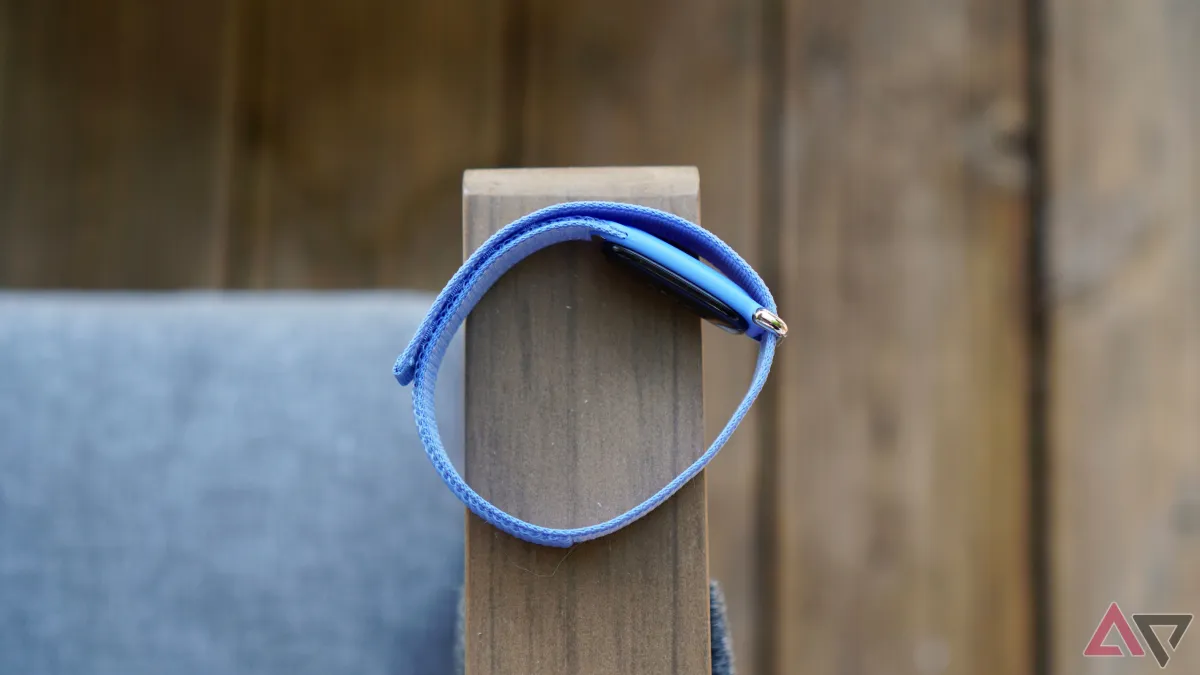
The Fitbit Air, a screenless fitness tracker designed to monitor Health Data silently in the background, has prompted many buyers to wear a traditional watch on the same wrist — or the opposite one — to compensate for the device’s lack of a clock.
That workaround directly contradicts what Fitbit built the Air to be.
A Device Built on Subtraction
The Air strips away everything that defines a modern smartwatch: no display, no notifications, no interaction required. Fitbit designed it to clip on and disappear, collecting heart rate, activity, and wellness data without demanding attention.
Still, telling the time remains a basic human need. Most people are not willing to give that up.
As a result, a growing number of Air owners are pairing the tracker with a separate analog or digital watch, effectively doubling their wrist hardware to replicate the single-device experience the Air was supposed to replace.
The Problem With Double-Wristing
Wearing two wrist-based devices raises practical issues beyond aesthetics. Optical heart rate sensors — the kind embedded in wrist trackers — rely on consistent skin contact and minimal movement to produce accurate readings, according to guidance published by the U.S. Food and Drug Administration.
A second band on the same wrist can shift the Air’s position, interrupt contact, or introduce motion artifacts that degrade data quality. On the opposite wrist, sensor placement moves further from the body’s core, which some researchers link to increased reading variance.
That said, the workaround is spreading. Users on forums and social platforms are sharing photos and setups that show the Air worn alongside everything from minimalist field watches to full smartwatches — which raises its own irony.
Paying for Minimalism, Adding It Back
The Air targets consumers fatigued by screen dependency and notification overload. Pairing it with a smartwatch restores exactly the screen and alerts the Air was meant to eliminate.
Pairing it with a basic analog watch is more defensible conceptually, but it still means wearing two bands, managing two clasps, and buying two devices to do what one mid-range Fitness Tracker already does.
Fitbit has not publicly addressed the double-wrist trend or offered official guidance on optimal placement when a second device is present.
What Fitbit Intended
The Air sits within a broader industry push toward passive, ambient health monitoring — wearables that gather data without user effort or engagement. Competitors including Oura Ring and Samsung’s Galaxy Ring pursue the same philosophy through finger-worn form factors, which avoid the wrist-watch conflict entirely.
Fitbit, now owned by Google following a completed acquisition in 2021, positioned the Air as a wrist-based answer to that ring-style segment.
The device assumes its wearer has already moved past the habit of checking a watch. For most people, that assumption Does Not yet hold.
-

-

-

-

-

-

-

-

