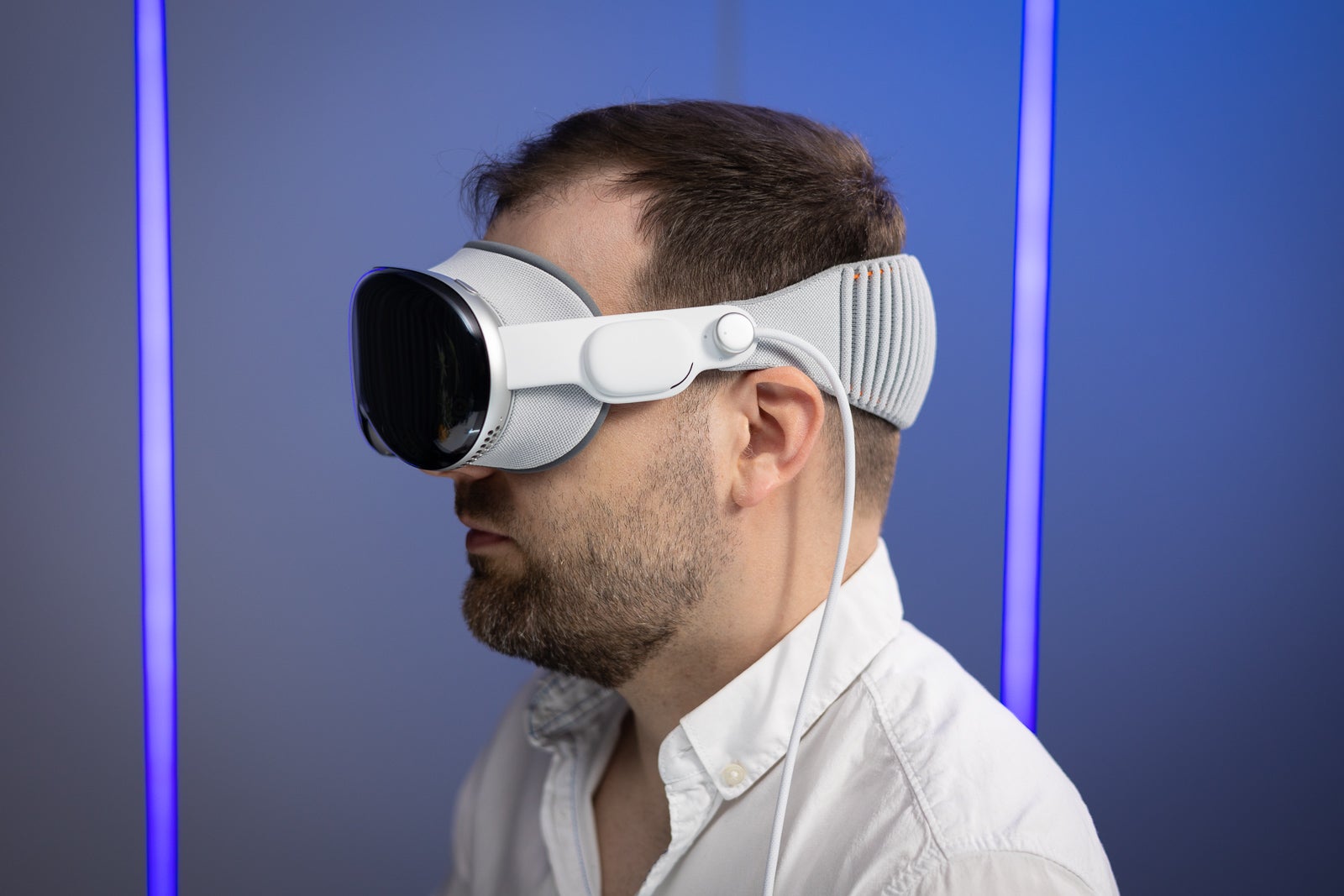
Apple is developing a second-generation Vision Pro headset that moves the battery pack outside the device, a design shift analysts say could meaningfully reduce the headset’s weight.
The original Vision Pro, which launched in February 2024 at $3,499, weighs approximately 600 to 650 grams depending on the headband configuration, according to Apple's official product specifications. That weight has drawn consistent criticism from early adopters and reviewers.
Redesign Details
Display Supply Chain Consultants analyst Ross Young first reported the external battery redesign, citing supply chain sources familiar with Apple’s development roadmap. Moving battery mass off the headset itself is a direct response to user fatigue complaints tied to the current front-heavy design.
Apple has not confirmed the project. The company declined to comment.
Market Context
The Vision Pro sits at the high end of the spatial computing market — a category that blends digital overlays with a live view of the physical world. Meta’s Quest 3, its most direct rival in consumer mixed-reality hardware, retails at $499.
Apple sold an estimated 500,000 Vision Pro units in 2024, according to IDC's worldwide AR/VR headset tracker. By contrast, Meta shipped approximately 7.7 million mixed-reality devices globally over the same period, IDC said.
The sales gap reflects both the price difference and the Vision Pro’s limited app ecosystem at launch. Apple opened visionOS to third-party developers ahead of the headset’s debut, but the platform’s software library remains far smaller than Meta’s.
Weight as a Design Problem
Independent ergonomics research has linked prolonged head-mounted display use to neck strain and discomfort. A 2023 study published in Applied Ergonomics found that headsets exceeding 400 grams significantly increased muscle load on the cervical spine during extended sessions.
Apple’s engineering teams are aware of the tension between battery capacity and device weight. The current Vision Pro achieves roughly two hours of standalone battery life from its external tethered pack. Any redesign will need to preserve that runtime while reducing overall system weight.
Second-Generation Timeline
Apple typically runs a two-year product cycle for first-generation hardware categories. That cadence would place a Vision Pro successor in early 2026, though supply chain timelines can shift.
Young has previously provided accurate advance reporting on Apple display technology, including early details on ProMotion 120Hz screens and mini-LED adoption across the iPad and MacBook lines. His track record gives his supply chain sourcing credibility among analysts who follow Apple hardware closely.
Still, no component orders have been publicly confirmed, and mass production has not begun, based on available supply chain data. Apple has made no regulatory filings related to a new headset configuration.
The original Vision Pro remains Apple’s only shipping spatial computing product. It is available in the United States, with a limited international rollout that began in mid-2024.