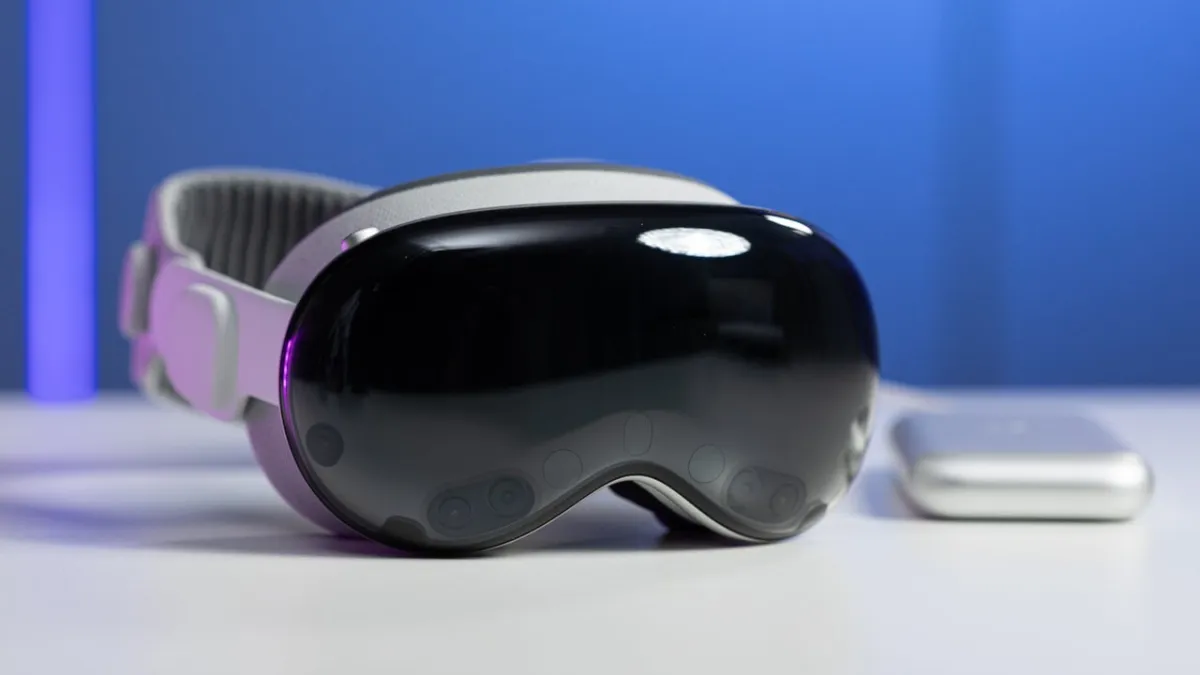
Apple CEO John Ternus has eliminated future Vision Pro headset models from the company’s product roadmap, directing resources instead toward Smart Glasses, according to analyst Ming-Chi Kuo.
Kuo, a supply chain analyst at TF International Securities widely tracked for his Apple predictions, published the report on his Medium blog, saying the move marks one of Ternus’s first major strategic decisions since taking over as chief executive.
The shift signals Apple’s retreat from the high-end spatial computing headset category — a segment the Vision Pro, priced at $3,499, struggled to crack at scale.
Ternus Takes the Wheel
Tim Cook stepped down as Apple CEO after more than a decade leading the company, handing the role to Ternus, who previously served as Apple’s senior vice president of hardware engineering.
Ternus built his reputation inside Apple overseeing hardware development across the iPhone, Mac, and wearables lines.
By canceling Vision Pro successors early in his tenure, he signals a clear break From One of Cook’s most high-profile hardware bets.
Vision Pro’s Difficult Run
Apple launched the Vision Pro in February 2024, positioning it as the future of personal computing — a spatial computing device, meaning one that blends digital content with the physical environment around the user.
Still, sales disappointed. Bloomberg reported Apple sold far fewer units than internal targets in the device’s first year, with demand cooling sharply after an initial burst of early-adopter interest.
At $3,499, the headset sat well beyond the reach of mainstream consumers, and developers showed limited appetite for building dedicated applications for the platform.
Smart Glasses Take Priority
Kuo said Ternus is now concentrating Apple’s augmented reality ambitions — technology that overlays digital information onto the real world — on a smart glasses product instead.
That puts Apple on a direct collision course with Meta, whose Ray-Ban smart glasses, developed in partnership with EssilorLuxottica, have sold strongly since their 2023 refresh.
IDC projects the broader wearables market, which includes smart glasses, will grow steadily through the late 2020s as form factors shrink and battery technology improves.
Smart glasses carry a dramatically lower manufacturing cost than full spatial computing headsets, making mass-market pricing far more achievable.
Meanwhile, Apple’s augmented reality patent filings have increasingly focused on lightweight eyewear form factors over the past two years, according to analysis by Reuters.
What Kuo’s Track Record Shows
Kuo has a mixed but widely respected record on Apple supply chain intelligence, with accurate calls on product launches and cancellations often arriving months ahead of official announcements.
That said, Apple Has not confirmed any changes to its headset roadmap or announced a smart glasses product.
The company typically declines to comment on unreleased products or strategic roadmap decisions.
Apple’s Vision Pro launched as a first-generation device, with the company at the time describing spatial computing as a long-term platform investment rather than an immediate mass-market product.