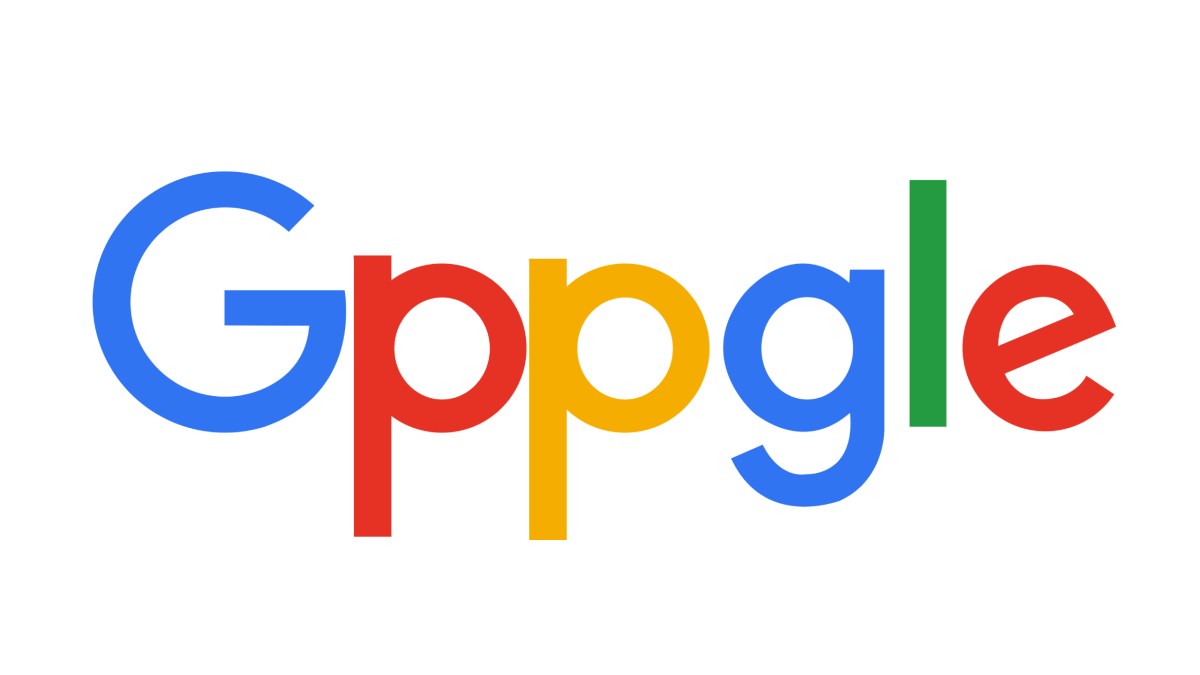
Google’s artificial intelligence systems cannot reliably spell the word “Google,” exposing a fundamental limitation in how large language models process written language.
The problem stems from how these models handle text. Rather than reading words as sequences of individual letters, they break language into “tokens” — chunks of text that can represent whole words, parts of words, or single characters, depending on frequency and context.
How Tokenization Creates Spelling Blind Spots
A tokenizer treats common words as single units. As a result, the model never learns to associate that unit with its constituent letters.
When a model encodes “Google,” it may store the word as one token rather than six discrete characters — G, o, o, g, l, e. In turn, when asked to spell it, the model reconstructs letter sequences from statistical patterns rather than direct knowledge.
That reconstruction is unreliable. The model guesses based on what letter combinations appear most often in its training data, not from any internal representation of the word’s actual spelling.
This is not unique to Google’s own products. The tokenization method — developed by researchers across the industry and used widely in systems built on the transformer architecture — affects virtually every major large language model, including those from OpenAI, Meta, and Anthropic.
Still, the failure is particularly visible when the word in question is the company’s own name. “Google” appears in training data at enormous volume, which makes the model’s inability to spell it correctly more striking, not less.
What the Research Shows
The issue has drawn attention from computational linguists and AI researchers. Studies examining model behavior on character-level tasks consistently show that models perform worse on spelling, letter counting, and anagram-style prompts than on higher-level reasoning tasks.
Google DeepMind has not publicly released data quantifying its models’ spelling error rates. The broader research community, however, has documented the pattern across model families.
A 2023 paper published in peer-reviewed proceedings at the Association for Computational Linguistics found that transformer-based models showed significant degradation on tasks requiring sub-word character awareness — precisely the skill spelling demands.
Researchers have proposed several mitigations. One approach introduces character-level tokenization layers that run alongside standard token processing. Another fine-tunes models on explicit spelling tasks to build associative memory between tokens and their letter components.
Neither fix eliminates the problem entirely. Both add computational overhead.
The Broader Stakes
For most users, a misspelled word from a chatbot is a minor irritant. For enterprise deployments — legal document drafting, medical transcription, automated publishing — spelling errors carry real cost.
Google’s Gemini models power a range of products used in workplace settings, including Google Workspace tools used by more than 3 billion users, according to Google’s own figures.
The company has positioned Gemini as a productivity assistant capable of drafting, editing, and summarizing documents. Spelling errors in that context are not abstract.
Tokenization as a design choice dates to early work on neural machine translation in the mid-2010s. Researchers adopted it to reduce vocabulary size and speed up training — goals that remain valid at scale.