The smartphone industry runs on imitation. When one manufacturer lands on something useful, rivals typically follow within a product cycle or two.
That pattern makes one long-standing Motorola feature all the more puzzling in its absence elsewhere.
What the Feature Does
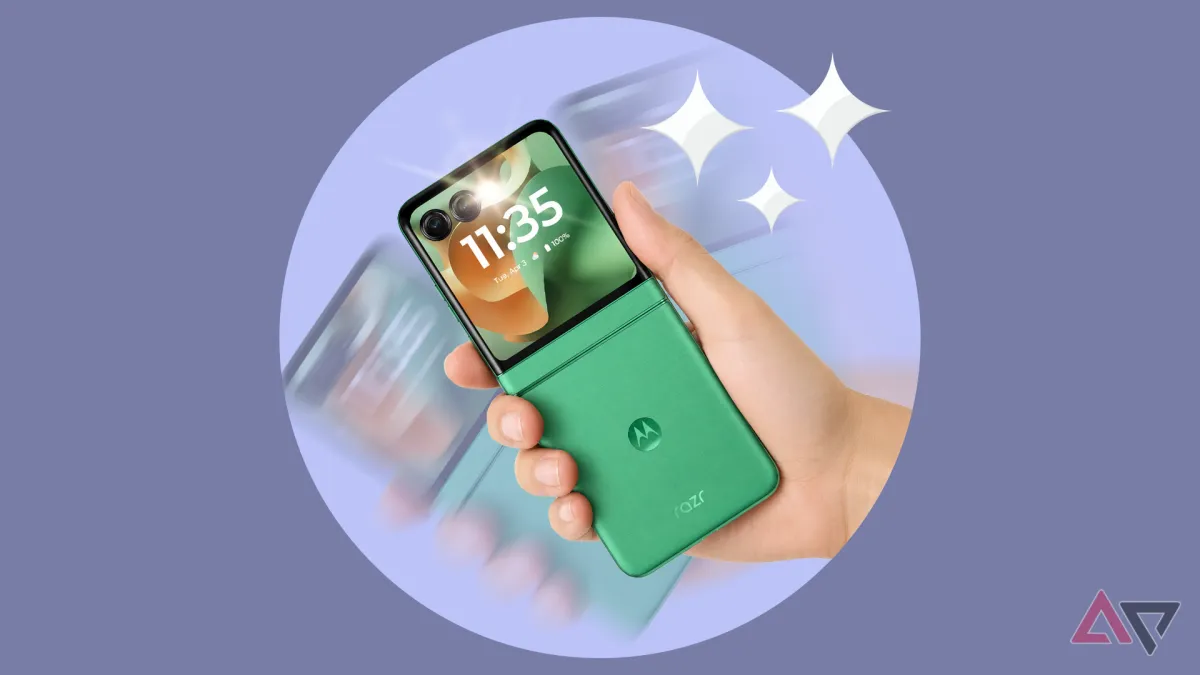
Motorola’s “Peek Display” — a low-power ambient notification screen — lets users check alerts, the time, and quick controls without fully waking the device.
That part is not new. Samsung, Google, and others offer always-on display modes with broadly similar functionality.
What sets Motorola’s implementation apart is its gesture responsiveness. Users can wave a hand over the screen to trigger the display, interact with notifications directly from the ambient layer, and do so without pressing a single button or lifting the phone off a surface.
In practice, that means a phone face-up on a desk responds to a passing glance — no tap, no raise-to-wake delay, no full unlock required.
Why It Stands Out
Raise-to-wake, the default on most flagship Android and iOS devices, requires physical movement of the handset. Button-press wake requires contact entirely.
Motorola’s proximity-triggered approach removes both friction points. It works when the phone stays flat, stays silent, and stays in low-power mode.
Still, neither Samsung nor Apple Has introduced a direct equivalent across their mainstream lineups. Samsung’s always-on display activates on tap or on a set schedule. Apple’s StandBy mode, introduced in iOS 17, requires the phone to sit in a MagSafe charger at an angle.
By contrast, Motorola’s system functions anywhere, anytime, on a flat surface, with no accessories required.
The Broader Picture
Motorola, now owned by Lenovo, has built its mid-range and flagship lines around practical software features rather than raw specification competition.
That strategy has helped it hold ground in cost-sensitive markets. According to IDC, Motorola ranked among the top five smartphone vendors in Latin America and held measurable share gains in North America through 2024.
Even so, software differentiation rarely survives contact with the big two. Apple and Samsung have historically absorbed useful ideas — split-screen multitasking, always-on displays, quick-launch camera gestures — from smaller players once adoption proved demand.
The fact that Motorola’s gesture-wake feature has existed across multiple device generations without a direct rival clone is, by the industry’s own standards, unusual.
What Users Say
Owners of Motorola devices consistently rank Peek Display among the features they most miss when switching platforms, according to user feedback aggregated across forums including Reddit’s r/Motorola community.
That kind of cross-platform regret is a reliable signal that a feature solves a real problem rather than serving as a spec-sheet checkbox.
Motorola first introduced Moto Display — the predecessor to the current Peek Display system — with the Moto X in 2013, making it one of the longer-running unreplicated ideas in consumer smartphone hardware.