Rivian’s Chief Software Officer Wassym Bensaid said the electric vehicle maker will never integrate Android Auto or Apple CarPlay into its vehicles, choosing instead to build its own AI-powered in-car software stack.
Bensaid made the remarks publicly, positioning the decision as a long-term software strategy rather than a near-term feature tradeoff.
Why Rivian Is Walking Away From the Industry Standard
Android Auto and CarPlay dominate the in-car interface market. Google and Apple both offer the platforms free to automakers, and most major brands — including Ford, GM, and Toyota — support at least one of them.
Rivian is bucking that trend entirely.
Bensaid said the company’s proprietary software gives it the ability to build AI features directly into the driving experience in ways that Android Auto and CarPlay cannot support.
The argument is familiar. Tesla made the same call years ago, locking users into its own interface with no third-party phone projection. That bet paid off commercially, but it has drawn consistent criticism from drivers who want access to their preferred apps and navigation tools.
A Promise That Depends on Delivery
Rivian’s position rests on a significant assumption: that its in-house AI software will outperform what Google and Apple already offer.
That is a high bar. Google embeds its own AI tools — including Gemini — directly into Android Auto. Apple continues to expand Siri’s role inside CarPlay. Both companies invest billions annually in their mobile and automotive software ecosystems.
Rivian, by contrast, is a young automaker still working to stabilize its manufacturing. Reuters reported in 2024 that the company cut its annual production forecast after a parts shortage halted output at its Illinois plant.
Still, Bensaid’s position is clear: Rivian will not cede the software layer to a third party.
What Drivers Actually Lose
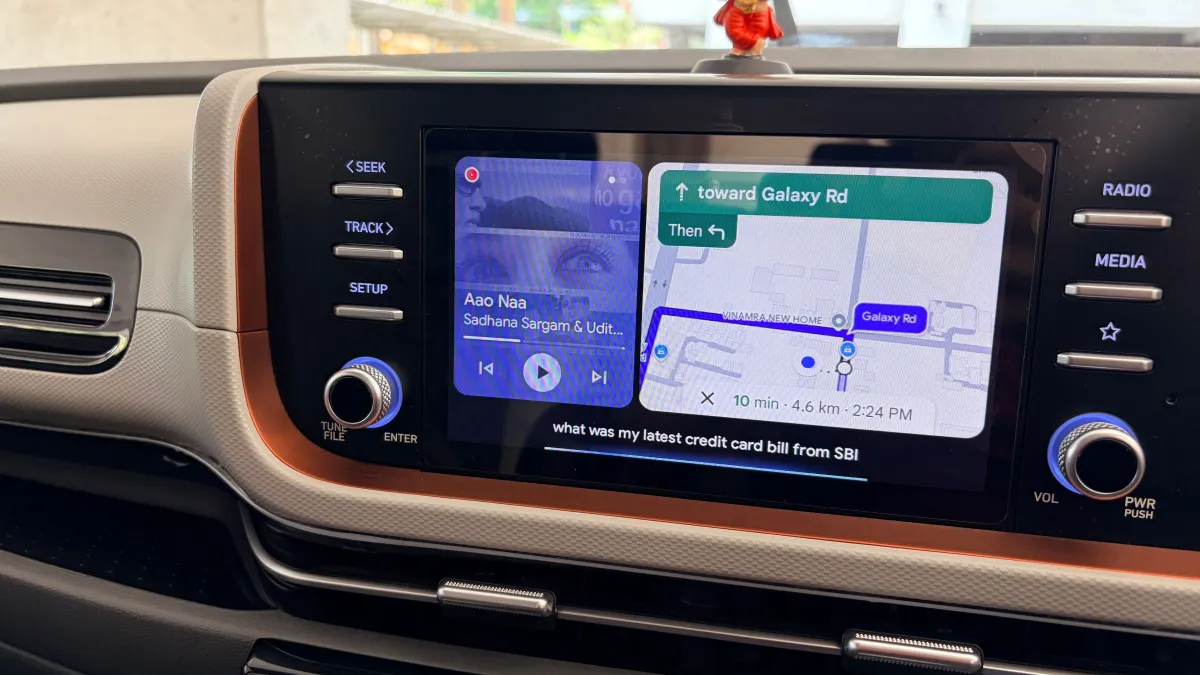
Locking out Android Auto and CarPlay means Rivian owners cannot project their phone interface onto the dashboard screen.
That cuts off access to Google Maps, Waze, Spotify, Apple Maps, Apple Music, and thousands of other apps that drivers rely on daily — unless Rivian builds or licenses equivalent functionality itself.
Some drivers accept that tradeoff willingly. Others cite the absence of CarPlay and Android Auto as a dealbreaker when shopping for a new vehicle, according to consumer research from J.D. Power.
Rivian does offer its own navigation and media systems, powered by a partnership with Spotify and Amazon’s Alexa platform. Even so, the breadth of those built-in options Does Not yet match what a projected phone interface delivers on day one.
Rivian went public in November 2021 in one of the largest U.S. IPOs of that year, raising roughly $13.5 billion, according to company filings with the U.S. Securities and Exchange Commission. Amazon holds a significant stake and has ordered 100,000 electric delivery vans from the company.