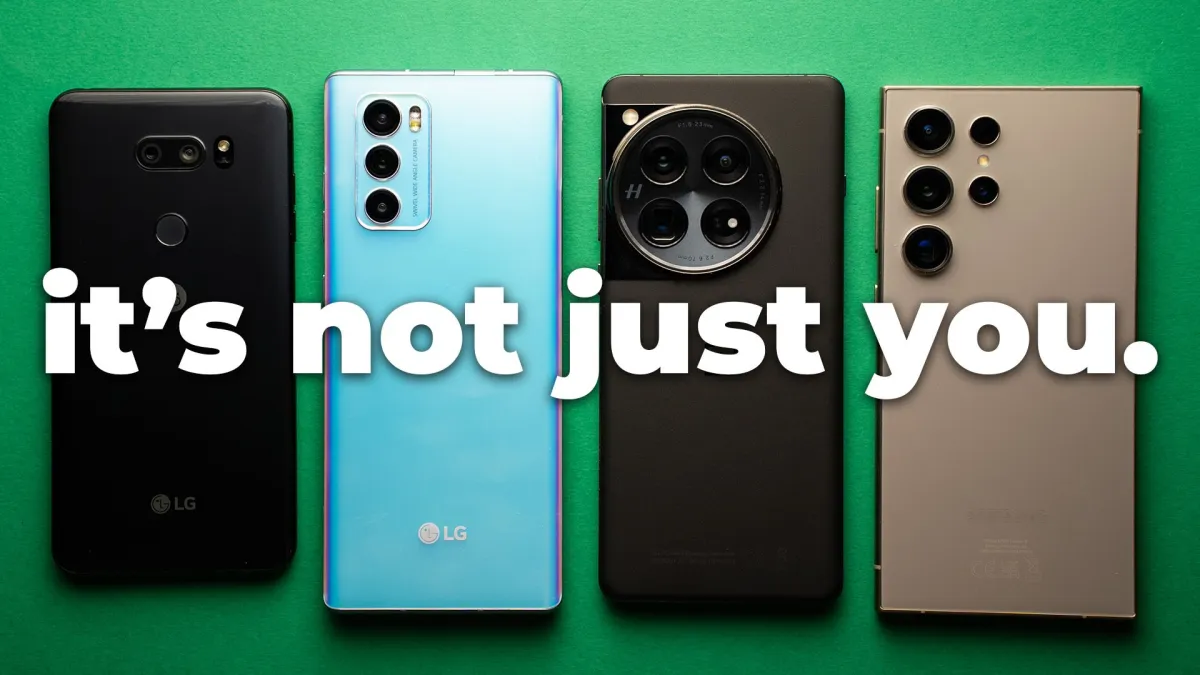
Smartphone quality is declining — and the trend is consistent enough to call it a pattern, according to reporting by Android Police.
The outlet points to recurring problems across manufacturers, price tiers, and operating systems, suggesting the decline is industry-wide rather than isolated to any single brand.
What’s Driving the Decline
Hardware durability has drawn sustained criticism in recent years. Consumers and reviewers alike report that flagship devices — phones positioned at the top of a manufacturer’s lineup — now prioritize thin profiles and camera hardware over repairability, battery capacity, and long-term build quality.
Software has followed a parallel trajectory. Bloatware, the pre-installed applications manufacturers and carriers load onto devices before sale, has grown heavier even as processors have grown faster.
That dynamic creates a counterintuitive result: newer phones can feel slower or less responsive in day-to-day use than older models running leaner software stacks.
The Price Problem
Flagship smartphone prices have risen sharply. Consumer Price Index data from the U.S. Bureau of Labor Statistics shows electronics prices broadly fell for decades — but premium smartphones now routinely exceed $1,000 at launch, a threshold that was rare before 2017.
Consumers paying more expect more. When the experience degrades instead, the gap between expectation and reality widens.
Meanwhile, mid-range devices — once a reliable value category — have absorbed many of the same software and design compromises as flagships, without the premium components that once partially justified those trade-offs.
Software Updates: A Double-Edged Reality
Manufacturers and Google have extended software support windows in recent years. Google, for instance, now promises seven years of Android updates for its Pixel 9 series, a significant extension from prior commitments.
Still, longer update cycles do not automatically mean better updates. Critics argue that many software patches introduce new interface changes, permissions requests, or feature removals that reduce usability over time.
That pattern — phones degrading through the software they receive, not just through physical wear — represents a shift from how consumers historically understood a phone’s lifespan.
Repairability Remains a Pressure Point
Right-to-repair advocates have pushed back against manufacturers for years. iFixit, the repair resource and parts retailer, consistently scores most flagship phones poorly on repairability, citing proprietary parts, adhesive-heavy construction, and software locks that disable components replaced outside authorized channels.
Some manufacturers have responded. Samsung partnered with iFixit in 2022 to offer official parts and repair guides. Apple launched a self-repair program the same year.
By contrast, most of the industry has not followed, leaving the majority of consumers with devices designed to be replaced rather than repaired.
The Broader Context
Global smartphone shipments have stagnated. IDC, the technology research firm, reported that worldwide smartphone shipments totaled approximately 1.24 billion units in 2023, down from a peak of roughly 1.57 billion in 2016.
Upgrade cycles have lengthened as consumers hold onto devices longer — a signal that either satisfaction with current hardware is high, or that new releases no longer offer a compelling reason to spend.
Industry analysts argue it is increasingly the latter.