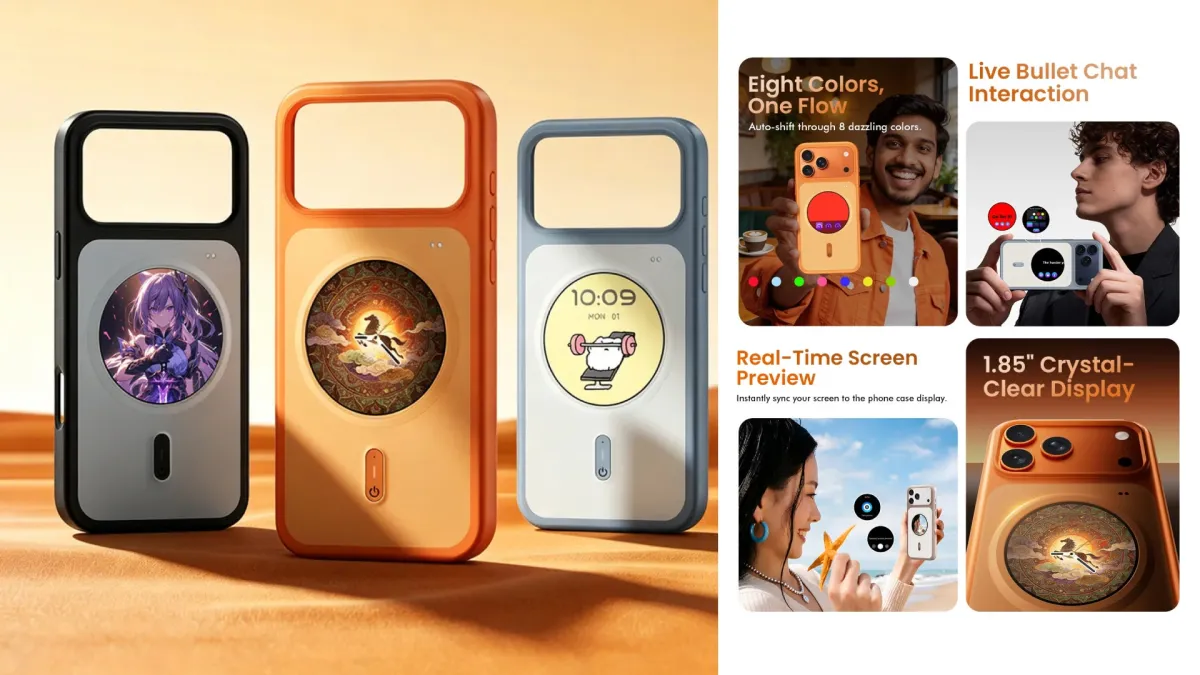
A $50 third-party case now gives iPhone 17 Pro Max owners a circular rear display — a feature that flagship Android phones have carried for years.
The case, highlighted by PhoneArena, attaches to the back of Apple’s top-tier handset and adds a small circular secondary screen without any hardware modification to the phone itself.
A Feature Android Flagships Pioneered
Samsung’s Galaxy Z Flip series and Chinese manufacturers including Huawei and Tecno have used secondary rear displays for several years, typically to show notifications, camera previews, and widgets.
Apple has not built a Rear Display into any iPhone model to date.
That gap has opened a small but growing market for case makers targeting iPhone users who want the aesthetic or functionality without switching platforms.
What the Case Actually Does
The circular screen connects to the iPhone through a wired or wireless interface — the exact connectivity method varies by manufacturer — and mirrors select notifications or acts as a viewfinder during selfie shooting.
At $50, it sits well below the price premium that phones with native secondary displays command. Samsung’s Galaxy Z Flip 6, which carries a cover screen as a built-in feature, starts at $999, according to Samsung's official U.S. pricing.
Still, a case-based solution carries limitations a native screen does not. Refresh rates, brightness, and software integration all depend on the case hardware rather than the phone’s own internals.
Broader Market Context
Consumer interest in multi-display mobile form factors has grown alongside the foldable phone segment. IDC reported that global foldable smartphone shipments reached 15.9 million units in 2023, up 25% year over year — a signal that buyers are willing to engage with unconventional screen configurations.
iPhone users represent a large addressable pool for accessories of this kind. Apple held approximately 57% of the U.S. smartphone market in late 2024, according to Statcounter.
That said, accessory-based secondary screens have surfaced before without breaking into the mainstream. Earlier attempts on Android devices struggled with software support and inconsistent build quality.
Whether this generation of circular-screen cases gains traction depends largely on how well developers support the secondary display with useful, reliable apps — something that has historically lagged behind the hardware itself.