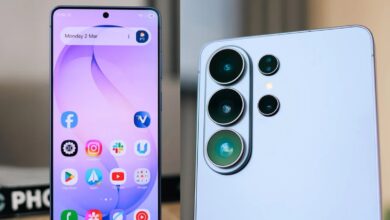
Samsung pushed a software update to the Galaxy S25 FE that improves fingerprint recognition accuracy, giving the budget model a biometric edge its flagship sibling does not currently have.
The update targets the under-display fingerprint sensor, tightening read reliability in conditions where the sensor previously struggled, including wet fingers and off-center presses.
What the Update Changes
The Galaxy S25 FE sits at a lower price point than the $1,300 Galaxy S25 Ultra, yet it now carries a fingerprint experience that Samsung has not replicated on its top-tier device.
Samsung has not confirmed whether it plans to roll the improvement out to other S25 series handsets.
Why the Gap Exists
The S25 FE and the S25 Ultra use different under-display sensor hardware. That distinction means software tuning on one model does not transfer directly to the other.
Samsung typically iterates fingerprint algorithms through incremental firmware drops rather than hardware revisions mid-cycle.
The Galaxy S25 FE launched as a cost-optimized alternative within the S25 lineup, targeting buyers who want flagship-adjacent features at a reduced price. Historically, Samsung’s Fan Edition phones have shipped with optical under-display sensors, while Ultra models have carried ultrasonic variants made by Qualcomm.
Qualcomm’s ultrasonic sensor technology, used in the S25 Ultra, reads a three-dimensional fingerprint map rather than a flat optical image, which Samsung has marketed as more secure and reliable across surfaces. Even so, real-world performance depends heavily on how Samsung calibrates its software stack on top of the hardware.
The S25 FE update suggests Samsung’s software team found accuracy gains available within the optical sensor’s existing parameters — gains that, at least for now, the ultrasonic-equipped Ultra does not share.