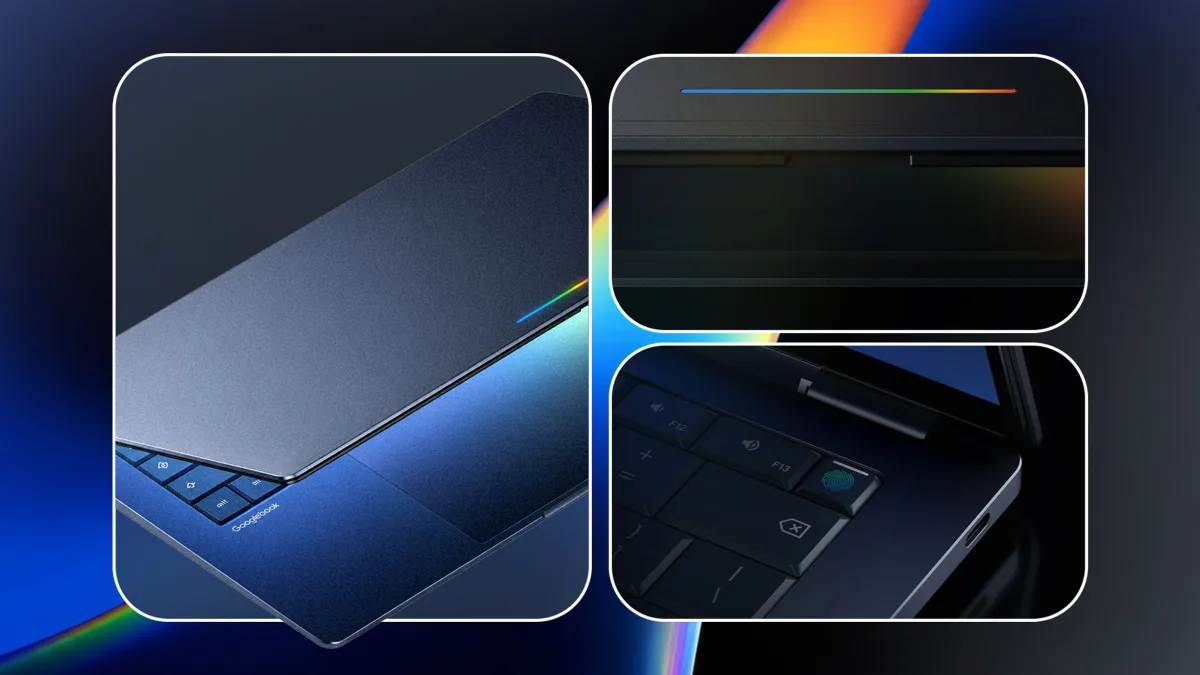
A reported Google-built laptop — informally dubbed the “Googlebook” — is drawing attention from users who say it could end their dependence on Windows machines.
The appeal is straightforward. Most people already live inside Google’s ecosystem on their phones, running Gmail, Chrome, YouTube, and Google Drive through Android for hours each day.
The Two-Device Problem
For many users, the workday means a Windows laptop. Everything else — messaging, browsing, streaming — happens on a smartphone.
That split creates friction. Files don’t always sync cleanly, notifications fragment across devices, and switching contexts mid-task costs time.
A Google-branded laptop running a tightly integrated OS could collapse that divide, placing Android apps, Google Services, and a full desktop interface on a single machine.
What Google Would Need to Get Right
App compatibility sits at the top of Most Users‘ requirements. Android apps run on ChromeOS today, but performance and screen optimization remain inconsistent across titles.
Google would also need to demonstrate a credible offline mode. ChromeOS has historically leaned on cloud connectivity, and users in areas with unreliable internet have found that dependency limiting.
Battery life and hardware quality matter too. Past Pixelbook devices drew praise for build quality but criticism for pricing — the Pixelbook Go started at $649 at launch, according to Google's official store archive.
The Windows Incumbent
Microsoft holds a dominant position in the PC market. Gartner reported that Windows accounted for roughly 73% of global PC operating system market share as of 2024.
That share reflects decades of enterprise software lock-in, legacy file formats, and IT infrastructure built around Microsoft products. Displacing Windows in professional environments requires more than a well-designed laptop.
Still, the consumer segment is different. Home users increasingly rely on browser-based tools — Google Docs, Sheets, and Slides — that run as well on ChromeOS as they do on Windows.
ChromeOS as the Foundation
Google has steadily expanded ChromeOS capabilities since 2017, when it introduced support for Android apps through the Google Play Store. Linux app support followed in 2018, broadening the software library further.
IDC data showed Chromebook shipments peaked during the pandemic-era education boom in 2020 and 2021, then contracted sharply as demand normalized. Google has since pushed ChromeOS upgrades and longer software support windows — up to 10 years for newer devices — to strengthen the platform’s value case.
A flagship “Googlebook” would sit above that Chromebook base, targeting users who want Apple MacBook-level hardware running Google software rather than macOS or Windows.
The Smartphone Bridge
Android has more than 3 billion active devices globally, according to Google I/O 2023 announcements. That installed base gives Google a ready audience already fluent in its apps and services.
If the Googlebook makes the transition from phone to laptop feel continuous — shared clipboard, instant hotspot, mirrored notifications — it removes one of the last practical reasons a Google-centric user would default to Windows.