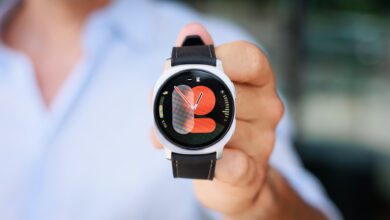
Samsung has added a feature to its Galaxy Watch lineup that lets the device control a connected air conditioner during sleep, adjusting temperatures automatically based on the wearer’s sleep stage data.
The update ties the watch’s sleep-tracking sensors to compatible smart home air conditioning units, allowing the system to raise or lower temperatures without user input through the night.
How It Works
Samsung’s SmartThings platform — the company’s smart home integration hub — acts as the bridge between the watch and the AC unit. When the watch detects a shift in sleep stage, SmartThings triggers a corresponding temperature adjustment on the connected air conditioner.
The feature relies on the watch’s existing biometric sensors, which monitor skin temperature, heart rate, and movement to determine which sleep stage the wearer is in at any given time.
Device and App Requirements
Users need a Galaxy Watch running the latest One UI Watch software and a SmartThings-compatible air conditioner to use the feature. Samsung has not published an exhaustive list of compatible AC models, but units from major manufacturers already integrated into the SmartThings ecosystem are expected to work.
The SmartThings app on Android handles the configuration. Users set a base temperature range and allow the watch’s sleep data to define when and how the system deviates from it.
Context
Sleep environment temperature has a documented effect on sleep quality. The National Sleep Foundation recommends a bedroom temperature between 60 and 67 degrees Fahrenheit (15.6 to 19.4 degrees Celsius) for optimal sleep, citing research linking cooler environments to deeper slow-wave sleep stages.
Samsung has steadily expanded the health and automation capabilities of its Galaxy Watch line over the past three years. The watches currently track sleep apnea risk — a feature the U.S. Food and Drug Administration cleared in 2023 — alongside blood oxygen levels, irregular heart rhythm detection, and continuous heart rate monitoring.
The broader consumer wearables market is moving in a similar direction. Smart home integration has become a competitive differentiator among manufacturers as the gap in raw sensor hardware between leading devices narrows.
Samsung’s Galaxy Watch series runs on Wear OS, the operating system Google develops in partnership with Samsung. The SmartThings platform connects more than 300 million devices globally, according to Samsung, giving the sleep-to-AC feature a sizable base of potential users from the moment of rollout.
The update arrives through an over-the-air software push, requiring no hardware changes on existing supported devices.