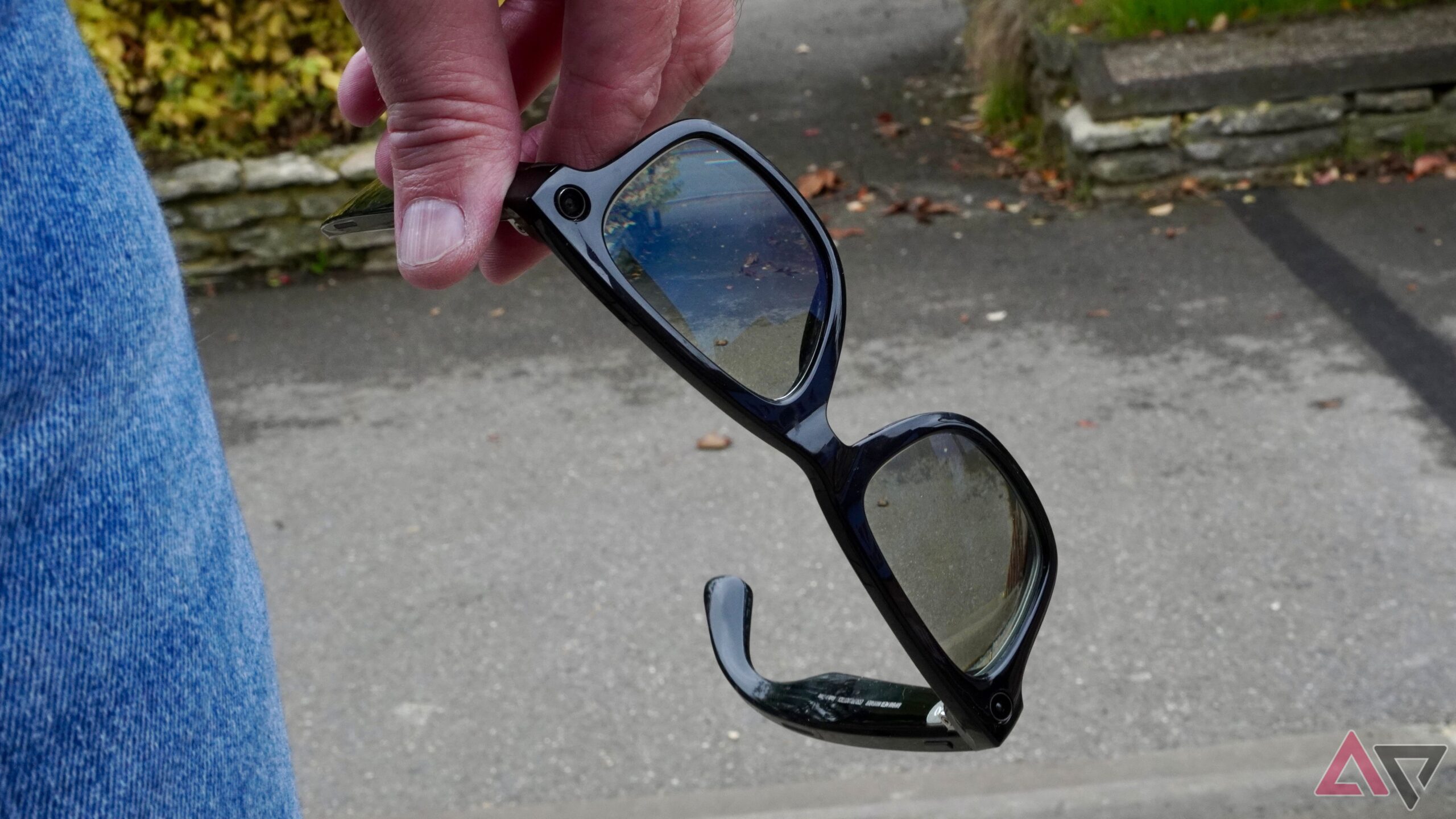
Police in Tianjin, China, have begun wearing smartglasses built to identify faces, read license plates, and monitor voices in real time during street patrols.
Officers received the devices — developed specifically for law enforcement use — to improve patrol efficiency and incident response, according to a district officer cited by Android Police.
“Make patrols and checks much more efficient, helping us proactively detect and respond to emergencies,” the officer said.
What the Glasses Do
The smartglasses combine several surveillance functions into a single wearable unit. They can scan faces against a database, capture license plates, and pick up audio from the surrounding environment.
That combination places them among the more capable wearable surveillance tools deployed by any municipal police force. The glasses feed data in real time, giving officers on foot access to identification checks they would previously have needed a fixed camera network or a separate device to perform.
Tianjin’s Surveillance Record
Tianjin is one of China’s larger northern cities, with a population of roughly 13.6 million, according to China's National Bureau of Statistics. It sits within a national surveillance infrastructure that already ranks among the densest in the world.
The Australian Strategic Policy Institute has documented China’s broad deployment of facial recognition technology across public spaces, transport hubs, and residential areas. The addition of officer-worn glasses extends that reach to mobile, on-demand identification in situations where fixed cameras have no coverage.
Wider Context
China’s government frames mass surveillance technology as a public safety measure. Critics, including human rights organisations, argue the systems enable disproportionate monitoring of ethnic minorities and political dissidents.
Human Rights Watch has reported extensively on the use of facial recognition and biometric data collection in Xinjiang, where authorities have deployed the technology against the Uyghur population at scale. Tianjin’s deployment is separate and targets general urban policing rather than a specific ethnic region.
Wearable police technology is not exclusive to China. Law enforcement agencies in the United States and United Kingdom have trialled body-worn cameras with live facial recognition capability, though most have faced legal challenges or operational restrictions.
In the UK, the Information Commissioner's Office has raised concerns about live facial recognition use by police, citing risks to data protection rights under domestic law. Several forces have paused or scaled back trials as a result.
By contrast, China operates without equivalent independent oversight of law enforcement surveillance tools. No domestic regulatory body has publicly reviewed the Tianjin smartglasses deployment or published data on their accuracy rates.
Facial recognition systems have known accuracy disparities across demographic groups. A National Institute of Standards and Technology study found error rates for some algorithms were significantly higher for women and people with darker skin tones than for white men.
The Tianjin police have not disclosed which algorithm the smartglasses use, what database the facial data is checked against, or how long captured data is retained.