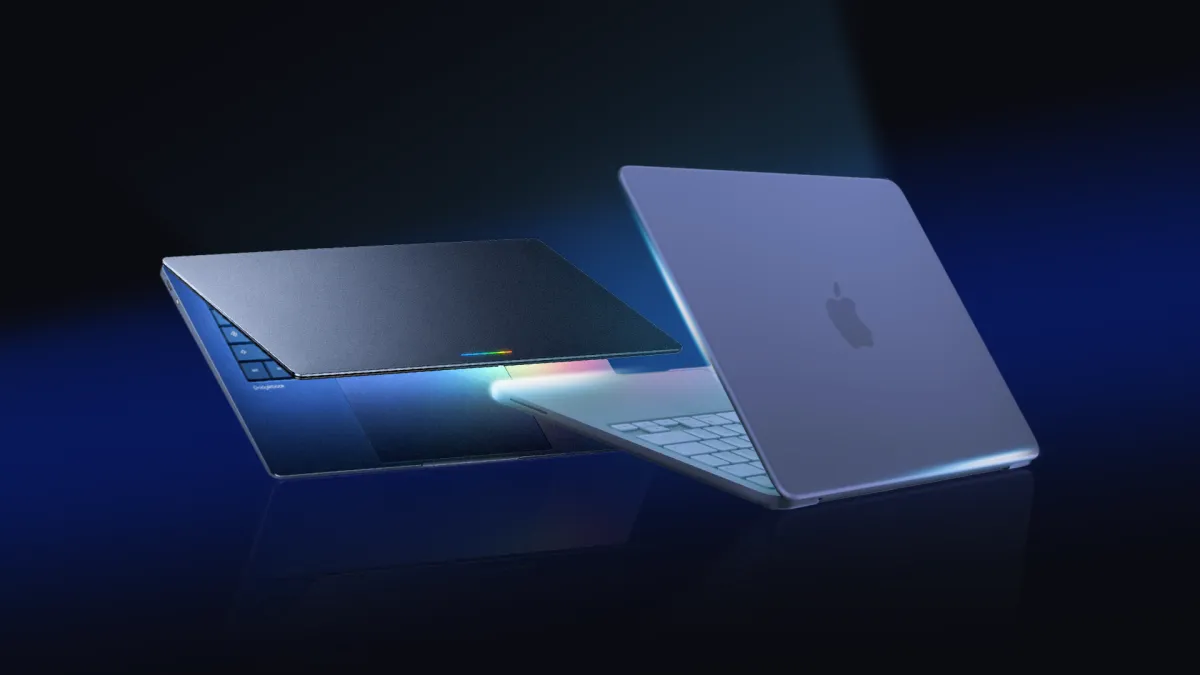
Google's Rumored “Googlebook” laptop has drawn attention for its design, but hardware aesthetics alone have rarely been enough to dislodge a dominant platform — and Apple’s MacBook remains exactly that.
Apple sold more than 20 million Macs in fiscal year 2024, according to Apple's annual SEC filing, a figure that reflects a user base built on software ecosystem loyalty, not just hardware preference.
That loyalty is the wall Google must scale.
What the Googlebook Reportedly Offers
Google has not officially announced a product under the Googlebook name, but design leaks and industry speculation suggest the company is developing a premium laptop that moves well beyond the traditional Chromebook form factor.
Chromebooks — laptops running Google’s Chrome OS, a browser-centric operating system — have long targeted the budget and education markets, not the premium segment where Apple dominates.
A sharper design alone Does Not change that positioning overnight.
The Ecosystem Problem
MacBook users do not stay on Apple hardware because of aluminum chassis or display quality. They stay because of software: Final Cut Pro, Logic Pro, seamless iPhone and iPad handoff, and a Unix-based terminal that developers rely on daily.
By contrast, Chrome OS still restricts users to web apps and Android applications, with Linux app support available but limited in scope and stability.
Google has made progress on closing that gap, but progress is not parity.
Meanwhile, Apple’s own silicon push has raised the performance bar considerably. The M-series chips — Apple’s in-house processors that replaced Intel hardware starting in 2020 — now deliver benchmark scores that rival workstation-class machines, according to independent testing by Geekbench.
That performance, paired with Battery Life that regularly exceeds 15 hours in real-world use, gives Apple a technical argument that design competition cannot easily answer.
Who Actually Switches?
Chromebooks have found their strongest market in K-12 education. IDC data reported by The Verge showed Chromebook shipments fell sharply in 2022 as pandemic-era education purchasing dried up, exposing how narrow that demand base actually is.
Premium laptop buyers — the audience a Googlebook would presumably target — skew toward professionals and creatives who have built workflows around specific software. Pulling them away requires more than good looks.
Still, Google has the resources and the motivation. The company earns nothing from hardware users running macOS, and a credible premium laptop would give it a direct stake in a market segment worth billions annually.
Even so, motivation has never been Google’s problem. Execution and follow-through have been — the company has discontinued or abandoned hardware projects repeatedly, from the Pixel Slate tablet to the Stadia game streaming platform.
Trust, once broken with hardware buyers, is slow to rebuild.
Apple’s MacBook line, meanwhile, has operated without a major product stumble since the controversial butterfly keyboard era ended in 2019, giving the company years of compounding goodwill among its core buyers.