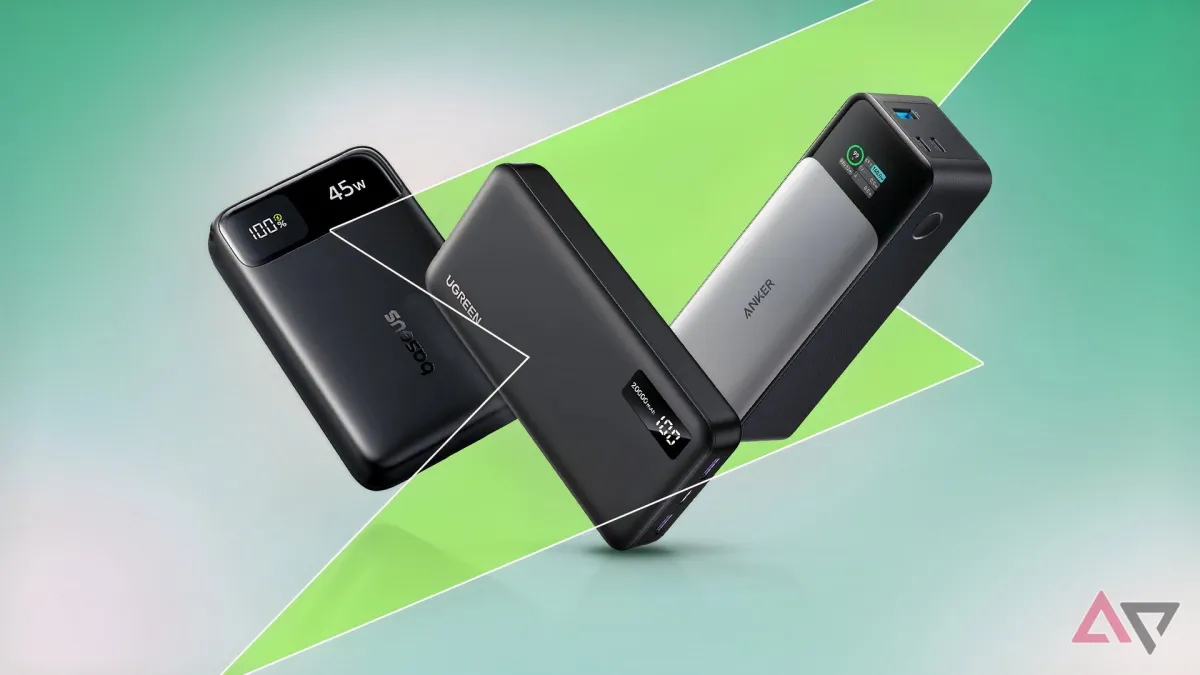
Regular power bank users know the frustration: a device that charges slowly, dies fast, or sits forgotten in a drawer after one disappointing trip.
Years of testing portable chargers — and daily real-world use — reveal that most power banks fail on the same single specification.
The Spec That Separates Good From Useless
Wattage output, often listed as charging speed, determines how fast a power bank can charge a connected device.
A unit with low wattage may take four or more hours to top up a modern smartphone — the same phone a wall adapter charges in under 90 minutes.
That gap matters when a user needs a quick boost before heading out, not a slow trickle over half a day.
Why Most Buyers Get This Wrong
Shoppers often focus on capacity, measured in milliampere-hours (mAh) — the total stored energy a bank can deliver before it needs recharging itself.
Capacity matters, but it tells only half the story.
A 20,000 mAh bank that pushes only 5 watts of output will charge a flagship phone at roughly the same pace as plugging into a laptop USB port — slowly, and often not fast enough to outpace active screen use.
By contrast, a 10,000 mAh bank rated at 30 watts or higher will charge most phones from near-empty to 50% in under 30 minutes.
What the Numbers Actually Mean in Use
Fast charging standards — including Qualcomm Quick Charge and USB Power Delivery (USB-PD), the open protocol supported across most modern phones and laptops — require a minimum wattage threshold to activate.
USB-PD at 18 watts is the floor for meaningful fast charging on most Android Phones.
At 30 watts and above, many devices hit their maximum accepted charging rate, meaning the power bank is no longer the bottleneck.
For Users Who also carry a tablet or lightweight laptop, 45 to 65 watts becomes the relevant range.
Still, higher wattage draws down the bank’s own battery faster, so total capacity and output speed require balancing against the user’s typical daily load.
What to Look For at the Point of Purchase
The wattage figure should appear on the box or product listing as “output” — not input, which refers to how fast the bank itself recharges from a wall outlet.
Both numbers matter, but output wattage directly affects the user’s device.
Input wattage above 18 watts means the bank recharges itself faster overnight or between uses — a secondary but real convenience factor.
Reputable third-party certifications, including USB-IF compliance — the USB Implementers Forum, the standards body that oversees USB specifications — confirm that a device’s listed wattage is genuine and safe.
Uncertified banks sometimes list inflated wattage figures that the hardware cannot sustain under real load conditions.
The USB-IF maintains a public database of certified products at USB Implementers Forum, allowing buyers to verify a device before purchase.