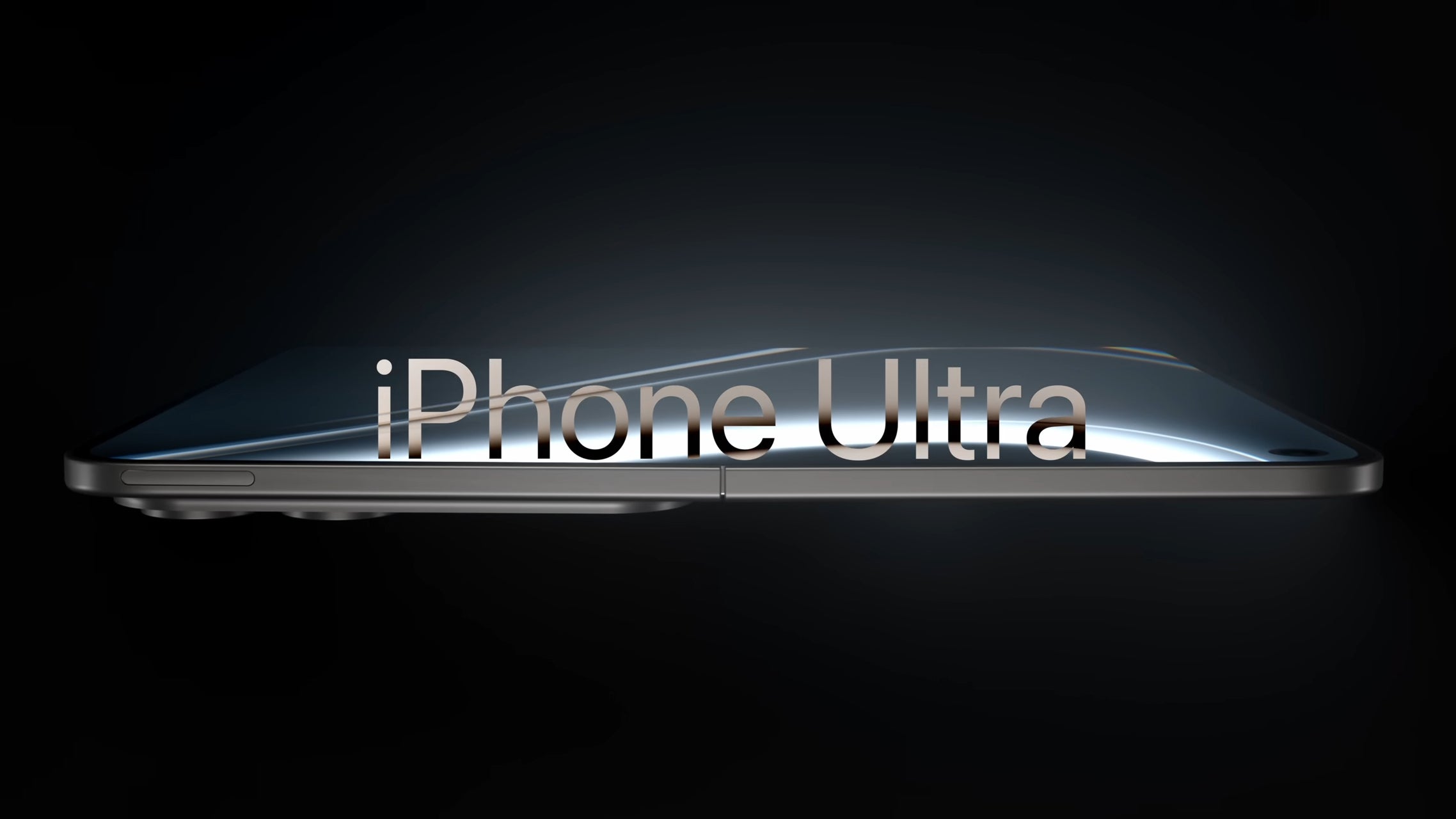
Apple’s foldable iPhone remains unconfirmed, and whether its launch has slipped by months means little until the company puts a device on a table.
Rumors of a delay have circulated across the supply chain analyst community in recent weeks. None carry official confirmation from Apple, which does not comment on unannounced products.
What the rumors say
Supply chain analyst Jeff Pu of Haitong International Securities said earlier this year that Apple was targeting a foldable iPhone launch in 2026. Separate reporting from Bloomberg’s Mark Gurman, who covers Apple for Bloomberg, has pointed to a thin, book-style foldable form factor under development at Apple.
Neither source has confirmed a specific delay. The word “delayed” implies a missed deadline — and Apple has never announced one.
Why the timeline barely matters
Apple does not compete on being first. It entered the smartphone market in 2007, years after devices running Windows Mobile and BlackBerry OS had established the category. It entered tablets, smartwatches, and wireless earbuds the same way — late by rival timelines, dominant by market outcome.
Samsung launched its first foldable, the Galaxy Fold, in 2019. As of 2024, foldables still represent a small slice of global smartphone shipments. IDC estimated foldable devices accounted for roughly 1% of total smartphone shipments in 2023.
That number has grown year over year, but the category has not broken into mass-market territory by any standard measure.
The foldable market Apple would enter
Samsung leads the foldable segment, with Huawei and a cluster of Chinese manufacturers — including Oppo, Vivo, and Honor — competing hard on price and hardware specification.
Google entered the foldable market with the Pixel Fold in 2023, then followed with the Pixel 9 Pro Fold in 2024. Neither device moved the segment materially.
The foldables sold today carry trade-offs: thick profiles when closed, visible display creases, high price points, and durability questions that mainstream buyers have been slow to accept.
Apple’s entry, whenever it comes, would face the same hardware constraints. Hinge mechanisms and ultra-thin foldable glass remain engineering problems no manufacturer has fully solved.
What Apple would need to get right
Apple’s typical approach involves entering a category once it believes it can set the quality standard. That means the delay question is secondary to the readiness question.
Battery life in a folded form factor presents a known challenge. Dividing internal space between two display panels and a hinge leaves less room for battery cells than a standard slab design allows.
Display crease visibility is the other persistent problem. Samsung has reduced crease depth across successive Galaxy Z Fold generations, but has not eliminated it. Apple’s display supply chain partners, including Samsung Display and LG Display, would face the same physics.
On pricing, Apple’s foldable would almost certainly launch above $1,500 based on comparable flagship positioning. Samsung’s Galaxy Z Fold 6 launched at $1,899, according to Samsung's official newsroom.
The foldable iPhone exists somewhere in Apple’s pipeline. When it arrives — 2026, 2027, or later — the market will still be waiting for a device that makes the format feel necessary rather than novel.